





Selecting the appropriate content delivery network (CDN) is a critical decision for optimizing your website's performance, security, and scalability. CDNs play a vital role in accelerating content delivery, protecting against DDoS attacks, and ensuring a seamless user experience. Additionally, they can significantly impact your website's availability and loading times.
When it comes to CDNs, Cloudflare and Akamai are two prominent choices. How do you determine which one is the ideal fit for your specific needs? In this article, we aim to guide you through this decision-making process by conducting a thorough comparison of Cloudflare vs Akamai. We'll delve into their core features, strengths, and key differences to empower you with the insights necessary to make an informed choice for your business.
- 01 Cloudflare vs Akamai: overview
- 02 What's the difference between Cloudflare and Akamai?
- 03 Cloudflare pros and cons
- 04 Akamai pros and cons
- 05 Cloudflare compared to Akamai
- 06 Akamai compared to Cloudflare
- 07 Features comparison
- 08 Cloudflare vs Akamai: Which is the best for your business?
- 09 Alternatives to Cloudflare & Akamai
- 10 Promotions on Security software
Start saving on the best SaaS
Secret has already helped tens of thousands of startups save millions on the best SaaS like Microsoft Teams, Google Workspace & many more. Join Secret now to buy software the smart way.

01 Cloudflare vs Akamai: overview
Cloudflare and Akamai are two prominent contenders in the world of content delivery networks (CDNs), each offering unique advantages designed to cater to specific user requirements.
Cloudflare is renowned for its robust CDN capabilities, particularly among businesses seeking to optimize website performance, enhance security, and ensure scalability. It provides a comprehensive platform that excels in accelerating content delivery, mitigating DDoS attacks, and enhancing user experiences. Conversely, Akamai offers a wide range of CDN solutions with a focus on global content delivery, web application security, and reliable availability. Akamai's extensive network infrastructure and advanced security features make it a top choice for enterprises with complex, high-demand web applications.
To make an informed decision between Cloudflare and Akamai, it's essential to consider your specific business needs, web traffic patterns, and security requirements. Cloudflare may be the optimal choice for organizations looking for a versatile and performance-oriented CDN, while Akamai offers a robust set of global delivery and security features, making it a suitable choice for enterprises with diverse online demands and a need for advanced protection.

Scalability
Cloudflare offers great scalability options, almost indefinitely, however, the more you scale, the pricier it gets. Akamai can also scale quite well, though at a slower pace compared to Cloudflare.

Cloudflare
Akamai
Customer Reviews
Cloudflare is highly rated on Capterra, while Akamai is not directly rated on Capterra, it manages to rate highly on other comparison sites (Gartner, etc.) with users overall happy with the service.
Cloudflare
Akamai
Customer Support
While neither platform offers a perfect customer service experience, CloudFront manages to squeeze out Akamai by being faster in terms of resolving disputes with customers.
Cloudflare
Akamai
Pricing Plan
As Cloudflare competes with individuals and small companies, it has better and more diverse pricing plans. On the other hand, Akamai’s pricing plans relly on your negotiation skills and the needs of your company, as there are only enterprise plans.
Cloudflare
Akamai
Ease of Use
Both platforms offer a great user experience, and both are highly regarded in terms of ease of use, in terms of the reviews, both seem to be equally easy to use.
Cloudflare
Akamai
Integrations
Cloudflare offers a range of integrations including WordPress, IBM Cloud, and Zendesk, enhancing website performance and security. Akamai, on the other hand, provides integrations with platforms like Microsoft Azure, Google Cloud Platform, and Salesforce, focusing on accelerating content delivery and ensuring secure transactions.
Cloudflare
Akamai
Deployment and setup
Cloudflare is easy to set up, ensure you change your nameserver to be compatible with what Cloudflare requires. Akamai is similarly easy to set up, and the speed of doing so will depend on how fast your organization can approve a budget for its services.
Cloudflare
Akamai
Speed and performance
Akamai offers 32 packets of TCP connections to Cloudflare’s 10, but that doesn’t make it much quicker. Like most CDNs, both struggle with caching data at the edge.
Cloudflare
Akamai
Security
Akamai can use either Kona Site Defender or Prolexic Routed for Web Application and API Protection—or a combination of both. Cloudflare offers great DDoS protection and protection against SQL injection attacks. Overall, both platforms offer great security, perhaps Akamai edging out Cloudflare slightly.
Cloudflare
Akamai
Location coverage
Akamai has a massive coverage with over 280,000 servers in over 135 countries and 1,500 networks worldwide. Similarly, Cloudflare offers great diversity in the coverage but not as diverse as Akamai.
Cloudflare
Akamai
02 What's the difference between Cloudflare and Akamai?
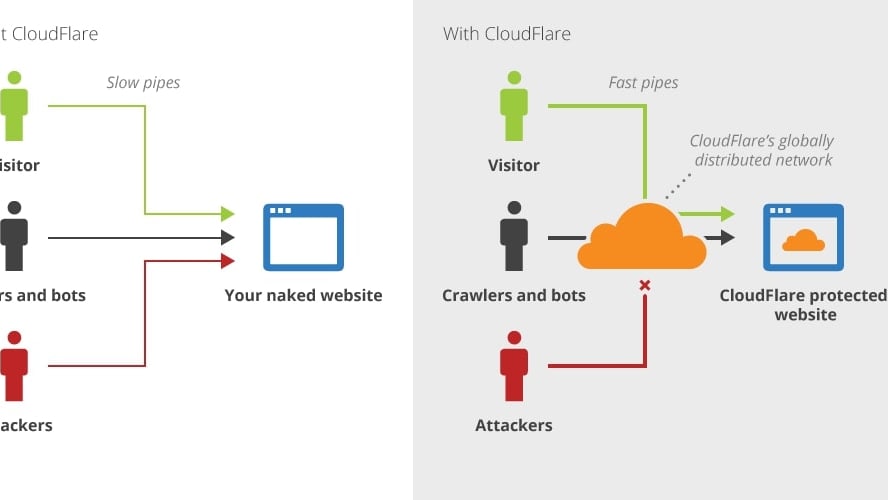
Cloudflare stands out from its competitors by offering more than just DDoS protection, including CDN and SSL/TLS
Cloudflare
CDN for professionals
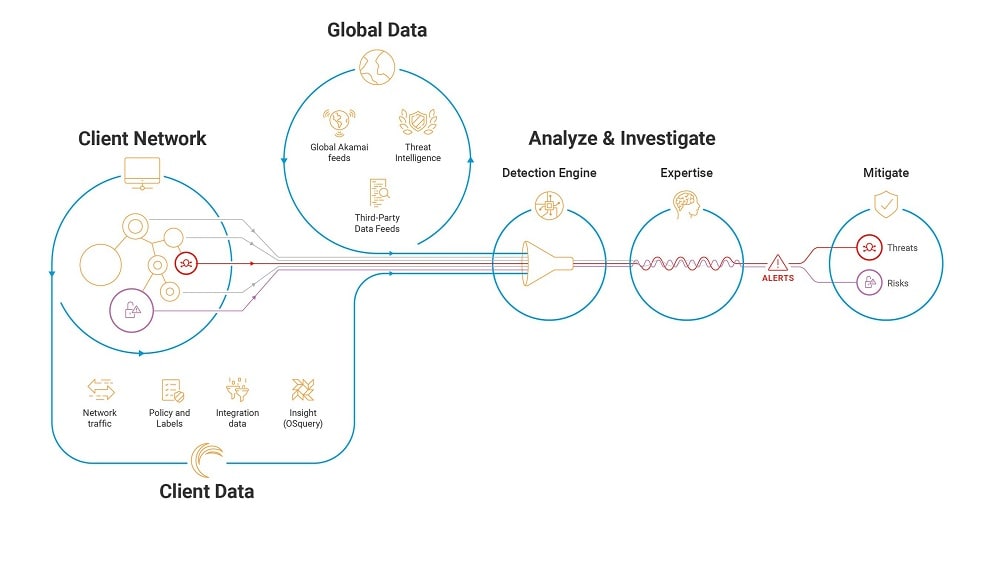
Akamai focuses on delivering enterprise-level solutions, as one of the largest CDN providers in the field.
Akamai
Akamai Technologies elevates business performance by optimizing digital experiences through its cutting-edge network services. It specializes in accelerating website and application delivery, ensuring security, and providing superior cloud solutions.
Both platforms are categorized as tools for content delivery networks. Cloudflare enhances performance and offers protection for websites, APIs, and SaaS connected to networks. On the other hand, Akamai focuses on providing mobile, cloud, media, and security solutions across various platforms.
Cloudflare stands out from its competitors by offering more than just DDoS protection, including CDN and SSL/TLS. Thanks to its global network of servers it offers the fastest content delivery while enhancing website performance. For their advanced security measures, they also deploy machine learning algorithms to improve in almost real-time, helping to prevent cyber attacks. Individuals and small businesses may opt for Cloudflare thanks to its free option for low volume NA/EU traffic, but also thanks to its user friendly interface and overal ease of use.
Akamai focuses on delivering enterprise-level solutions, as one of the largest CDN providers in the field. Similar to Cloudflare it too has an extensive network of servers, which are globally distributed in over 135 countries. This allows them to offer optimal website performance even during high traffic periods. Their emphasis is on meeting the needs of large organizations, ensuring that their websites can handle large traffic loads while maintaining stability and security. Cloud-based security and media delivery solutions, along with other advanced features, helps them stand out in terms of the offer to enterprise clients.
Finally, the largest difference between these two platforms lies in their target audience and service offerings. Cloudflare tries to cover a wide range of users and use cases, from individuals to large companies. Meanwhile, Akamai targets large enterprises whose demands require robust infrastructure and specialized enterprise solutions. Understanding these key differences may help you make a more informed choice of which solution is better for your needs.

Cloudflare
Premium
CDN for professionals
$5,000 in credits for self-funded startups // $250,000 in credits funded startups
Save up to $250,000
03 Cloudflare pros and cons
What are the advantages of Cloudflare?
- Website performance improvement: Cloudflare operates a global network of data centers, which helps improve website loading times through content caching and optimized content delivery. This results in faster page loading for visitors.

- DDoS attack mitigation: Cloudflare offers robust DDoS protection, shielding your website from distributed denial-of-service attacks, which can otherwise disrupt your online services and cause downtime.
- Content delivery network (CDN) benefits: Cloudflare acts as a CDN, distributing website content from servers located geographically closer to visitors. This reduces latency and improves overall user experience.
- Security features: Cloudflare provides various security features such as web application firewall (WAF), SSL/TLS encryption, and rate limiting to protect your website from threats like malware, SQL injection, and brute force attacks.
- Analytics and insights: Cloudflare offers analytics tools to monitor website traffic, track performance metrics, and gain insights into visitor behavior, helping you make data-driven decisions for your web infrastructure.
What are the disadvantages of Cloudflare?
- Learning curve: For users new to Cloudflare, the platform may have a learning curve, especially when configuring advanced settings and security rules.

- Cost: While Cloudflare offers a free plan, some advanced features and higher levels of service come at a cost. The pricing can vary depending on your specific needs and can potentially be expensive for larger enterprises.
- Limited control: Some users might find that Cloudflare's level of control and customization is not as extensive as they require, particularly when compared to self-managed solutions.
- Potential for false positives: The security features, including the web application firewall, can sometimes trigger false positives, blocking legitimate traffic if not configured carefully.
- Dependency on a third-party network: Using Cloudflare means routing your website's traffic through their network, which can lead to potential issues if there are problems or outages within Cloudflare's infrastructure. This can affect your website's availability.
Compare Cloudflare to other tools


Cloudflare vs Google DNS


Vercel vs Cloudflare

Cloudflare vs AWS Activate

Cloudflare vs GoDaddy

Cloudflare vs CloudFront

Google Cloud (GCP) vs Cloudflare
04 Akamai pros and cons
What are the advantages of Akamai?
- Global content delivery: Akamai operates one of the largest and most distributed content delivery networks (CDNs) in the world, ensuring fast and reliable content delivery to users worldwide, even in remote regions.
- Highly scalable: Akamai's infrastructure is designed for high scalability, making it suitable for businesses with rapidly growing online audiences and traffic.
- Security features: Akamai offers robust security solutions, including DDoS protection, web application firewall (WAF), and threat intelligence services, helping to safeguard your web applications and infrastructure.
- Performance optimization: Akamai optimizes website and application performance through content caching, image optimization, and dynamic content acceleration, resulting in improved user experiences and faster loading times.
- Advanced analytics: Akamai provides extensive analytics and reporting tools, allowing you to gain insights into your website's performance, traffic patterns, and user behavior to make informed decisions.
What are the disadvantages of Akamai?
- Cost: Akamai's services can be relatively expensive, especially for businesses with high traffic volumes or specialized needs. Pricing can vary widely depending on the services and level of support required.
- Complexity: Setting up and configuring Akamai's services can be complex, requiring expertise and experience. Users may face a learning curve, particularly when implementing advanced features.
- Limited control: Some users may find that Akamai's level of control and customization is not as granular as they require, particularly when compared to self-managed CDN solutions.
- Dependency on a third-party network: Relying on Akamai's network means your traffic is routed through their infrastructure, which can pose risks if Akamai experiences outages or disruptions.
- Contractual commitments: Akamai often requires long-term contractual commitments, which may not be ideal for businesses seeking more flexible or short-term solutions.
05 Cloudflare compared to Akamai
Cloudflare and Akamai are both prominent content delivery network (CDN) providers, but they have distinct features and strengths. Cloudflare is known for its user-friendly interface and competitive pricing, making it accessible to a wide range of businesses. It excels in website optimization and DDoS protection.
On the other hand, Akamai offers a vast global network with top-tier performance, ideal for enterprises with high demands. It specializes in security solutions and provides extensive scalability. The choice between Cloudflare and Akamai depends on your specific needs, budget, and the level of performance and security required for your online operations.
Is Cloudflare better than Akamai?
 Is Cloudflare better than Akamai?
Determining whether Cloudflare is better than Akamai depends on your unique requirements. Cloudflare offers an intuitive interface and competitive pricing, making it accessible to various businesses. It excels in website optimization and DDoS protection.
In contrast, Akamai boasts a vast global network and is favored by enterprises with high demands. It specializes in security solutions and offers extensive scalability. The choice hinges on factors such as your budget, specific needs, and the level of performance and security vital for your online operations. Ultimately, both Cloudflare and Akamai have strengths and are suitable for different scenarios.
What is Cloudflare best used for?
Cloudflare is best used for optimizing website performance and enhancing security. Its content delivery network (CDN) accelerates content delivery, reducing loading times for visitors. Cloudflare also offers robust DDoS protection, safeguarding websites from malicious attacks.
Beyond that, it provides SSL/TLS encryption for secure data transmission and a web application firewall (WAF) to shield against cyber threats. Cloudflare's network also enhances global availability and reliability, ensuring that websites remain accessible even during traffic spikes. It's an ideal choice for businesses looking to improve user experience, protect their online assets, and ensure the reliability and availability of their web services.
Can Cloudflare replace Akamai?
Cloudflare can potentially replace Akamai for some businesses, depending on their specific needs. Cloudflare offers competitive performance, security, and content delivery capabilities, making it a suitable choice for many organizations. It's cost-effective and user-friendly, making it appealing to a broad range of users.
However, Akamai has a more extensive and established global network, specialized security solutions, and scalability tailored for enterprise-level demands. Replacing Akamai with Cloudflare requires a careful evaluation of your organization's requirements and goals, considering factors such as budget, performance, security, and scalability, to ensure it's the right fit for your specific use case.
Is Cloudflare cheaper than Akamai?
Cloudflare is often considered more cost-effective than Akamai for many businesses. Cloudflare’s pricing offers competitive tiers, including a free plan, making it accessible to smaller organizations and startups. Their pricing model is transparent and straightforward. In contrast, Akamai typically caters to larger enterprises and tends to have higher costs associated with its services.
However, it's important to note that the specific cost comparison between Cloudflare and Akamai depends on factors such as the scale of your operation, required features, and service level agreements. Therefore, while Cloudflare is generally perceived as more affordable, the cost differential can vary based on individual business needs.
Is there a better Security software than Cloudflare?
While Cloudflare offers a comprehensive suite of content delivery and security features, it's crucial to consider alternative software options to determine the best solution for your specific requirements.
Several noteworthy alternatives to Cloudflare in the content delivery network (CDN) space include Akamai, Fastly, Azure CDN, Amazon CloudFront, and KeyCDN.
Choosing the optimal CDN software depends on factors such as your website's global reach, performance demands, security needs, and budget constraints. Cloudflare may excel in certain areas, but exploring these alternatives can provide valuable insights and help you make an informed decision that perfectly aligns with your CDN requirements. Each CDN provider has its unique strengths, making it essential to evaluate them in the context of your particular use case.
Cloudflare
Premium
CDN for professionals
$5,000 in credits for self-funded startups // $250,000 in credits funded startups
Save up to $250,000
06 Akamai compared to Cloudflare
Akamai and Cloudflare are prominent content delivery network (CDN) providers, each with distinct strengths. Akamai boasts an extensive global network, making it ideal for enterprises with demanding web traffic requirements. Its focus on security includes DDoS protection and web application firewall capabilities. However, Akamai's pricing can be on the higher side.
In contrast, Cloudflare offers competitive pricing, appealing to a broad range of users. It excels in user-friendly interface, website optimization, and DDoS protection. The choice between Akamai and Cloudflare depends on your organization's specific needs, budget, and the level of performance and security required for your online presence.
Is Akamai better than Cloudflare?
Determining whether Akamai is better than Cloudflare depends on individual business needs. Akamai is a well-established content delivery network (CDN) with a vast global network and specialized security solutions, making it an excellent choice for large enterprises with high traffic demands and stringent security requirements.
However, Cloudflare offers competitive performance and security features at a lower cost, making it more accessible to a broader range of businesses. The choice between Akamai and Cloudflare hinges on factors such as budget, scalability, performance, and security needs. It's essential to evaluate both solutions in the context of your specific use case to make an informed decision.
What is Akamai best used for?
Akamai is best suited for businesses and organizations with high-demand web traffic and stringent security needs. It excels in providing content delivery network (CDN) services on a global scale, ensuring fast and reliable content delivery to users worldwide, even in remote regions.
Akamai specializes in DDoS protection, web application security, and threat mitigation, making it an ideal choice for safeguarding against cyber threats. Its extensive network infrastructure and scalability are beneficial for enterprises seeking to maintain web application performance and security in the face of increasing online traffic and evolving security challenges. Akamai is particularly valuable for large-scale and high-availability online services.
Can Akamai replace Cloudflare?
Whether Akamai can replace Cloudflare depends on specific business needs and priorities. Akamai offers a robust content delivery network (CDN) with global reach and advanced security features, making it a suitable choice for enterprises with demanding web traffic and stringent security requirements.
However, Cloudflare provides competitive CDN and security solutions at a lower cost, appealing to a broader range of users, including smaller businesses and startups. Replacing Cloudflare with Akamai requires careful consideration of factors such as budget, performance, security, and scalability to ensure it aligns with your organization's unique requirements and objectives. Both options have their strengths, making an informed decision crucial.
Is Akamai cheaper than Cloudflare?
Akamai’s pricing is generally considered more expensive than Cloudflare for many users. While Cloudflare offers cost-effective pricing tiers, including a free plan, making it accessible to businesses of various sizes, Akamai typically caters to larger enterprises with more extensive resources.
Akamai's services are known for their performance and security, but they often come at a higher price point. It's essential to evaluate the specific cost comparison based on your organization's scale, needs, and required features, as well as considering budget constraints. While Cloudflare is often seen as more budget-friendly, the actual cost difference can vary depending on individual business requirements.
Is there a better Security software than Akamai?
While Akamai offers a robust content delivery network (CDN) and security solutions, it's essential to explore alternative CDN providers to determine the best fit for your specific requirements.
Several notable alternatives to Akamai in the CDN and security space include Cloudflare, Fastly, Amazon CloudFront, Google Cloud CDN, and KeyCDN.
Choosing the optimal CDN provider depends on factors such as your website's global reach, performance demands, security needs, and budget constraints. Akamai may excel in certain areas, but exploring these alternatives can provide valuable insights and help you make an informed decision that perfectly aligns with your CDN and security requirements. Each CDN provider has its unique strengths, making it essential to evaluate them in the context of your particular use case.
07 Features comparison
Cloudflare is Better at Increasing the Performance of Websites and Applications Compared to Akamai

It excels in optimizing content delivery by strategically positioning servers worldwide, ensuring that content is delivered as close as possible to the end user
Cloudflare's globally distributed CDN takes center stage. It excels in optimizing content delivery by strategically positioning servers worldwide, ensuring that content is delivered as close as possible to the end user. This approach guarantees improved responsiveness and a higher quality of service. For instance, when a user in New York accesses a website using Cloudflare, the content may be served from a server located in New Jersey, significantly reducing latency.
In contrast, Akamai's Static Content Caching does contribute to improved website speeds by storing frequently accessed content closer to users. However, it lacks the extensive reach of Cloudflare's CDN network, which boasts a broader and more geographically distributed infrastructure. Consequently, Cloudflare often outperforms Akamai in terms of speed and overall performance, making it a preferred choice for organizations prioritizing rapid and reliable content delivery.
Cloudflare’s User-Friendly Interface Trumps Akamai’s Complexity

Cloudflare's dashboard is meticulously designed, offering a seamless experience that grants users access to a comprehensive array of features without the hassle of navigating through intricate menus.
In the realm of user interface and ease-of-use, Cloudflare stands out as the more user-friendly option. Cloudflare's dashboard is meticulously designed, offering a seamless experience that grants users access to a comprehensive array of features without the hassle of navigating through intricate menus. This simplicity extends to the setup process, which is intuitive and straightforward. Even newcomers can swiftly familiarize themselves with the platform.
Conversely, while Akamai is undeniably powerful and robust, its interface may pose challenges to beginners. Packed with advanced options and settings, it can initially appear overwhelming and necessitates a steeper learning curve. Cloudflare's user-friendly approach can be particularly advantageous for those seeking a smoother onboarding experience.
Akamai's Extensive Integration Ecosystem Outpaces Cloudflare

Akamai's robust API ecosystem facilitates seamless integration with a diverse range of third-party applications and services.
When it comes to integration possibilities, Akamai takes the lead with its expansive API selection, positioning it as the clear frontrunner in this aspect. Akamai's robust API ecosystem facilitates seamless integration with a diverse range of third-party applications and services. This versatility proves especially beneficial for businesses seeking to tailor their solutions to specific needs, customizing and extending their usage beyond standard features.
In contrast, Cloudflare also offers a respectable array of integrations but may fall short when measured against the exhaustive list provided by Akamai. If your business heavily relies on a wide spectrum of tools and services, Akamai's comprehensive integration capabilities make it the superior choice for ensuring a seamless and well-connected ecosystem.
Cloudflare and Akamai are Equally Robust at Securing Websites and Applications

Cloudflare's security prowess shines through its comprehensive defenses.
Both Cloudflare and Akamai provide robust security features. Cloudflare's security prowess shines through its comprehensive defenses. It shields websites and applications from an array of threats, including malicious bots and debilitating DDoS attacks. Through its Web Application Firewall (WAF), it fortifies digital assets against vulnerabilities, ensuring the safety of sensitive data. For instance, Cloudflare's Bot Management effectively identifies and mitigates automated bot traffic, preserving server resources and user experience.
On the other hand, Akamai's SSL security bolsters data protection by encrypting information during transfer. This encryption ensures that data remains confidential and secure, safeguarding it from potential eavesdropping and unauthorized access.
Cloudflare Excels at Providing Real-Time Analytics and Reporting than Akamai

Cloudflare's comprehensive analytics and reporting tools provide deep insights into web traffic and application performance.
Cloudflare's comprehensive analytics and reporting tools provide deep insights into web traffic and application performance. Cloudflare's analytics platform goes beyond the basics, allowing users to monitor website traffic, detect and address security threats in real-time, and track application usage comprehensively. Users can delve into detailed reports on various aspects, including user behavior, DNS queries, and performance metrics, aiding informed decision-making and optimizations. For instance, Cloudflare's Real-Time Analytics feature empowers administrators with immediate visibility into traffic trends and potential anomalies.
While Akamai also offers dashboard reporting, it doesn't delve as deeply into real-time insights or provide the same level of granularity as Cloudflare's analytics suite. Cloudflare's analytics and reporting capabilities make it a top choice for organizations seeking comprehensive data-driven insights to enhance web and application performance.
Cloudflare Outshines Akamai in Load Balancing and Traffic Management Features
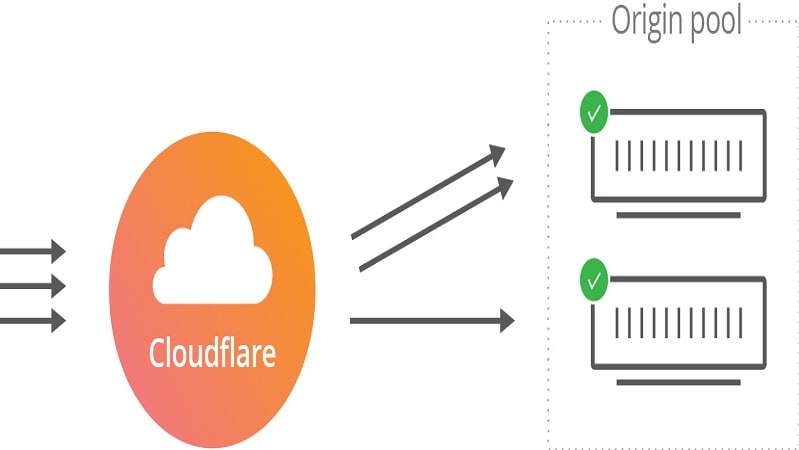
It achieves this by efficiently distributing incoming traffic across multiple servers or data centers and intelligently routing users to the nearest and healthiest server.
With advanced load balancing and traffic management features, Cloudflare takes the lead by offering advanced features that guarantee high availability and optimal performance for applications. It achieves this by efficiently distributing incoming traffic across multiple servers or data centers and intelligently routing users to the nearest and healthiest server. For example, Cloudflare's Global Load Balancing feature dynamically directs traffic to the most suitable server based on factors like server health, latency, and user location, ensuring a seamless user experience even during traffic spikes.
On the other hand, Akamai's Dynamic Content Routing aims to enhance site performance but doesn't match Cloudflare's level of sophistication when it comes to load balancing capabilities. Cloudflare's advanced load balancing ensures that applications remain highly available and responsive, making it a preferred choice for organizations prioritizing optimal performance and reliability.
Cloudflare Surpasses Akamai with its Developer-Centric Platform

Cloudflare allows developers to deploy serverless code globally with unparalleled ease and speed, ensuring maximum performance and reliability.
In the realm of developer tools and platforms, Cloudflare stands as a robust choice, particularly with its emphasis on serverless computing. Cloudflare allows developers to deploy serverless code globally with unparalleled ease and speed, ensuring maximum performance and reliability. For instance, Cloudflare Workers enables developers to write and deploy code that runs on Cloudflare's edge servers, optimizing content delivery and enhancing application performance. This global reach and serverless capability make Cloudflare a favored platform for developers seeking to create efficient, scalable, and globally distributed applications.
Conversely, while Akamai's Logs offer valuable insights for developers by providing visibility into application activities, it doesn't offer the same comprehensive development environment or extensive set of developer tools that Cloudflare does. Cloudflare's developer-centric approach makes it an excellent choice for organizations aiming to leverage cutting-edge technologies for their web applications.
08 Cloudflare vs Akamai: Which is the best for your business?
Cloudflare is the best tool for you if:
- You require a globally distributed content delivery network (CDN) to enhance website performance and user experience.
- DDoS protection and web application security are paramount for safeguarding your online assets.
- Real-time analytics and reporting are essential for monitoring web traffic and optimizing performance.
- You seek a user-friendly interface and intuitive setup process for ease of use.
- Customization and integration options are vital to tailor your web infrastructure to specific business needs.
 You require a globally distributed content delivery network (CDN) to enhance website performance and user experience.
Akamai is the best tool for you if:
- You require a content delivery network (CDN) with a vast global network for high-availability and fast content delivery across the world.
- Enterprise-level security, including DDoS protection and web application firewall, is crucial for protecting your online assets.
- You need a CDN with extensive scalability to accommodate rapidly growing web traffic and complex online operations.
- Your organization relies heavily on integrating with a wide range of third-party applications and services, benefiting from Akamai's extensive API support.
- Advanced performance optimization and traffic management are essential to ensure the best possible user experience for your global audience
Cloudflare
Premium
CDN for professionals
$5,000 in credits for self-funded startups // $250,000 in credits funded startups
Save up to $250,000
09 Alternatives to Cloudflare & Akamai

Google Cloud (GCP)
Used by 11249 members
$2,000 in credits for 1 year if you never raised funds // $350,000 in credits for 2 years if you did
Save up to $350,000

DigitalOcean
Used by 6930 members
$200 in credits
Save up to $200

AWS Activate
Used by 6106 members
Up to $100,000 in credits or 20-50% off your monthly spend through an AWS partner (must be spending $100+/month)
Save up to $300,000

Microsoft Azure
Used by 2398 members
$5,000 in credits for 6 months if you didn't raise funds // Up to $150,000 in credits for 2 years if you did
Save up to $150,000
10 Promotions on Security software
Cloudflare and Akamai are great tools, but Secret offers promo codes with discounts on over 2190+ different SaaS solutions. New deals are added regularly, helping you save money on your online subscriptions. Get access to codes for other Security software you might want to purchase

Promo code for Auth0
12 months free

Avast coupon code 2026
50% off for 1 year

McAfee discounts
$100 off your yearly subscription

Discount for Surfshark
79% off and 2 months free on 2 year plans

NordVPN coupon
60% off for 1 year or 74% off for 2 years
Promo code for AWS Activate
Up to $100,000 in credits or 20-50% off your monthly spend through an AWS partner (must be spending $100+/month)

1Password deal
14 days free on 1Password Business

PureVPN free credits
70% off annual plans for 1 year
Microsoft Azure promotion
$5,000 in credits for 6 months if you didn't raise funds // Up to $150,000 in credits for 2 years if you did

Drata discounts
30% off for 1 year
Start saving on the best SaaS
Secret has already helped tens of thousands of startups save millions on the best SaaS like Microsoft Teams, Google Workspace & many more. Join Secret now to buy software the smart way.