


Today’s AI app builders have made tremendous strides beyond the “cute demo.” The real challenge is no longer simply creating a user interface but rather developing a well-designed and functional code base, a reliable back end and a process for deploying your app without it failing when you attempt to add authentication, payment processing or address edge cases. This is precisely where both Emergent and Lovable come into play in the decision-making process.
Here in this tutorial, I will be comparing Emergent vs Lovable from the perspective of a builder; how quickly you can generate a fully functioning application, how much control do you really have over your generated application, and what happens after your prototype has been developed into an actual shipping-ready product.
If you are looking to see what types of discounts you may qualify for based on the application development you plan to complete, you can also visit the Emergent Standard plan for free (first month) and the Lovable 15% off annual Pro and Business plans.
- 01 Emergent vs Lovable: overview
- 02 What's the difference between Emergent and Lovable?
- 03 Emergent pros and cons
- 04 Lovable pros and cons
- 05 Emergent compared to Lovable
- 06 Lovable compared to Emergent
- 07 Features comparison
- 08 Emergent vs Lovable: Which is the best for your business?
- 09 Alternatives to Emergent & Lovable
- 10 Promotions on AI Development software
- 11 Emergent vs Lovable: Conclusion
Start saving on the best SaaS
Secret has already helped tens of thousands of startups save millions on the best SaaS like Microsoft Teams, Google Workspace & many more. Join Secret now to buy software the smart way.

01 Emergent vs Lovable: overview
Emergent and Lovable offer "build apps with words," however, they are based upon two very different development paradigms. If you're looking for an artificial intelligence (AI) platform which mimics a collaborative engineering workflow of design, build and deploy, then Emergent aligns with your goals. However, if you're interested in a highly productized "prompt to fully functional web application" with rapid iterations, Lovable is usually the easiest way to go about it.
Emergent views itself as a conversation-based platform for AI agents to design, write code for and deploy applications from beginning to end. The pricing structure for Emergent is free at entry level with paid options starting at Standard and going up to Pro. For more information regarding Emergent's pricing plans and features.
The focus of lovable is to build full stack web applications, like using chat with a credit based system that offers free (e.g., community) tiered options (e.g., pro, business). The "real app" story can be made tangible for users through the integrations in their documentation (e.g., using a managed backend with Supabase; payment integration with stripe).
Let's compare the features of these two services side by side.

Production readiness
Emergent’s positioning emphasizes end to end building through conversation, Lovable becomes production ready fastest when paired with a solid backend setup, for example, Supabase.

Emergent
Lovable
Backend & data layer
Lovable’s Supabase integration can give you Postgres, auth, storage, and edge functions via chat, which is a serious advantage for standard SaaS backends.
Emergent
Lovable
Integrations (auth, payments, Git)
Lovable’s doc-driven integrations, Supabase and Stripe, are a strong SaaS story. Emergent’s GitHub integration is highlighted on its pricing page.
Emergent
Lovable
Testing & QA workflow
Emergent’s build through conversation framing maps well to iterative engineering. Lovable can do QA, but its core center of gravity is app generation and iteration.
Emergent
Lovable
Deployment workflow
Emergent explicitly promotes an end to end flow that includes deployment. Lovable often relies on a clean Supabase and edge function deployment discipline for production behaviors.
Emergent
Lovable
Customer support
Both are modern SaaS products with support expectations that depend heavily on plan level and complexity. Treat support as something to validate during onboarding.
Emergent
Lovable
Customer reviews
Sentiment tends to correlate with fit, agent-driven building appeals to teams shipping frequently, while productized prompt to web app flows delight fast MVP builders.
Emergent
Lovable
Ease of use
Lovable feels more guided for typical web app builds, Emergent can feel more engineering workflow oriented, especially when you push beyond basic templates.
Emergent
Lovable
Time-to-prototype
Both are fast. Lovable is great for immediate full-stack scaffolding, Emergent shines when you want a broader agent-driven build that keeps moving toward shipping.
Emergent
Lovable
Pricing plan
Emergent is compelling for piloting with a low cost entry offer, Lovable’s annual discount is attractive when you already know you’ll commit to a credit tier.
Emergent
Lovable
02 What's the difference between Emergent and Lovable?
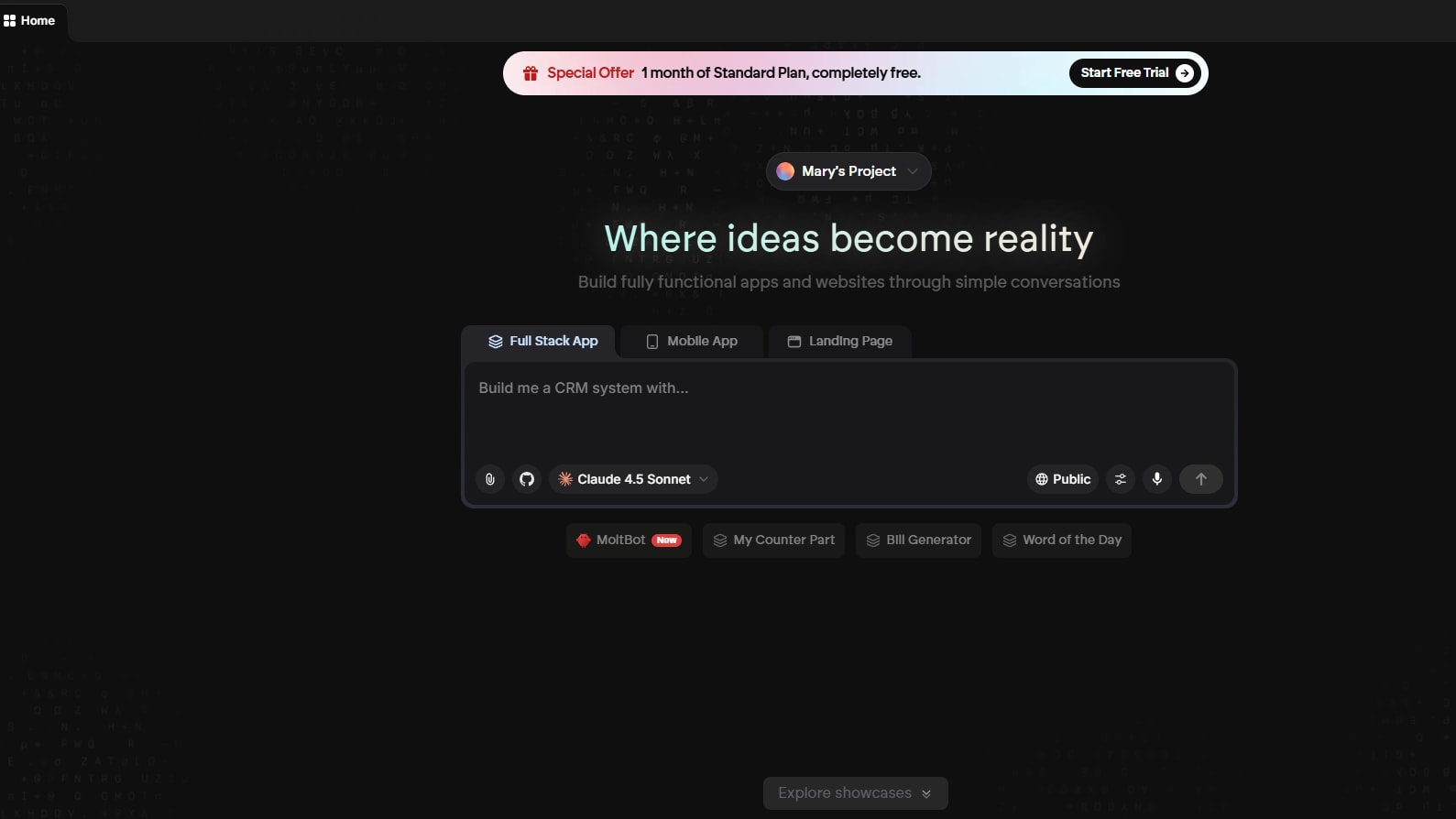
Emergent's AI workspace for building full-stack applications
Emergent
Build software with words, not code
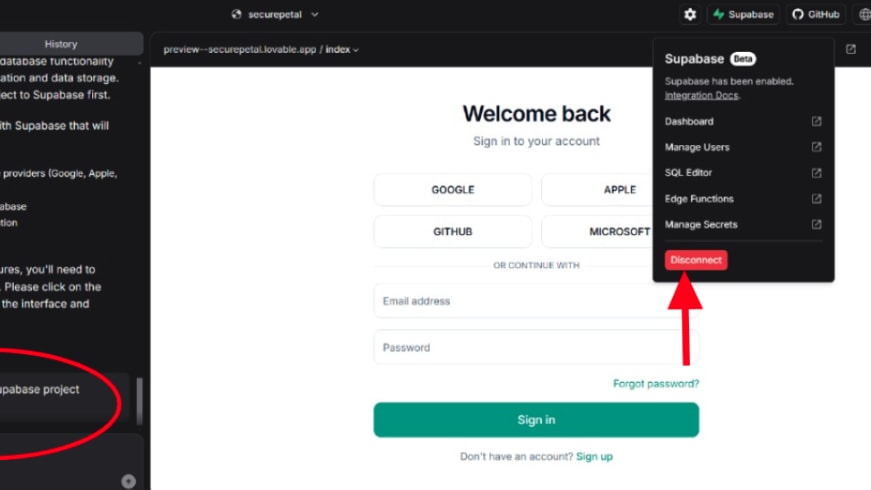
Build a full-stack backend with Lovable and Supabase integration
Lovable
Lovable.dev is an AI-powered platform that transforms ideas into fully functional apps within seconds, acting as your personal full stack engineer. It enables you to build internal tools, websites, prototypes, and B2B applications quickly and efficiently.
Emergent uses an agent based build flow as opposed to a UI only generator. The process of build is defined by describing the application, and Emergent will move you through implementation using this description with a focus on deploying something. This is apparent in their pricing page as they frame the product as AI agents that design, code and deploy the entire application from start to finish. Thus, it seems Emergent is focused on providing a complete engineering lifecycle from design to deployment.
As for Lovable, it is much clearer in terms of what "full stack" means to them in practice. Their documentation for the Supabase integration does not provide a generic checkbox, but instead describes specific functionality such as Postgres tables, authentication, file storage, real time updates and edge functions that are all accessible via chat. Since many app builders struggle at the point in development where apps have user accounts, persistent data and server side logic, having a backend generated via chat when integrated with Supabase allows users to create a backend that closely resembles a traditional SaaS architecture.
Finally, there are differences in terms of pricing philosophies. Emergent provides a publicly available pricing model showing free, standard and pro levels for monthly pricing with scaling credits and capabilities. Lovable also has a pricing model but one based on credits with multiple price levels and annual billing as a method to optimize costs once your usage patterns have been validated. In general if you are in a "prove it" stage of validating a real project with minimal friction, it would be better to select the tool that will allow you to do so first and then commit to the tool once you have a better understanding of what your weekly output and actual credit burn will be.

Emergent
Used by 2075 members
95% off your first month on the Standard plan
Save up to $19

Lovable
Used by 3370 members
15% off annual Pro and Business plans
Save up to $500
03 Emergent pros and cons
What are the advantages of Emergent?
- End to end shipping bias: Emergent’s product framing emphasizes not just generating code, but moving through a start to finish build flow that includes deployment. That’s the mindset you want when prototypes are expected to become products.

- Solid value for iterative building: When your app evolves daily, new roles, new data rules, new workflows, an agent-like approach can be more resilient than generate once and hope. It’s better aligned with sprint-based development.
- GitHub integration baked into the plan story: Emergent highlights GitHub integration in its Standard tier, which is a practical signal for teams who care about repo hygiene and collaboration.
- Credit-based scaling without immediate enterprise friction: Emergent’s plans scale credits and capabilities, making it easier to match cost to intensity of building rather than forcing a one size fits all seat model.
- Good fit for agencies and internal tool teams: If you build multiple apps for multiple stakeholders, a conversation-driven build pipeline can help you maintain velocity while keeping deliverables coherent.
What are the disadvantages of Emergent?
- Less guided web app wizard feel: If your goal is a very prescriptive prompt to SaaS flow, Emergent can feel more like a flexible engineering engine than a strict template-driven builder.

- Quality depends on specification clarity: Like any agent-driven workflow, you’ll get the best results when you provide explicit acceptance criteria, roles, permissions, edge cases. Vague prompts tend to create rework loops.
- Pro tier jump can be steep: Emergent’s public pricing shows a significant step up for Pro, which means you should validate whether you truly need advanced features before upgrading.
- Complexity is a double edged sword: The power that helps with production apps can feel like overhead if you only need a tiny CRUD tool or a static website.
- Still requires technical judgment: Even with AI, you’ll want someone who can review architecture, deployment decisions, and security implications, especially once real user data is involved.
04 Lovable pros and cons
What are the advantages of Lovable?
- Backend done for real with Supabase: Lovable’s documentation details how it can create schemas, authentication flows, storage, and edge functions through chat when connected to Supabase, this is genuinely production-grade infrastructure for many SaaS use cases.
- Payments flow through Stripe with server-side logic: Lovable’s Stripe integration explains how it generates edge functions and ties billing to authenticated users, exactly the kind of last mile work that makes SaaS difficult.
- Fast iteration loop: If you’re doing product discovery, ship, test with users, refine, Lovable’s chat-first approach and web app bias can keep you moving without constant context switching.
- Clear cost ladder: Lovable’s credit tiers and annual billing give you a straightforward way to align spend with output once you understand your usage pattern.
- Good for founders building conventional SaaS: Dashboards, portals, lightweight CRMs, booking apps, internal admin tools, Lovable tends to map well to these patterns when paired with Supabase.
What are the disadvantages of Lovable?
- Production safety requires discipline: Because Lovable makes it easy to build quickly, teams sometimes underinvest in security rules, for example, RLS policies in Supabase. You still need to validate access control rigorously.
- Full-stack often means Supabase-centric: If your organization requires a different backend platform, you may spend more time adapting the generated approach to your standard stack.
- Credit economics can surprise you: If you iterate aggressively or rebuild large portions frequently, credit consumption can become a real constraint, so measuring burn rate early matters.
- Not every integration is magically solved: Stripe can be scaffolded, but real billing edge cases, proration, tax, role-based entitlements, webhook strategy, still require careful product decisions.
- Advanced workflows still need engineering review: As soon as you introduce multi-tenant data models, complex permissions, and compliance requirements, you’ll want someone senior to validate the architecture.
Compare Lovable to other tools


Lovable vs n8n

Lovable vs bolt.new
05 Emergent compared to Lovable
I begin my response to someone asking whether I would choose either Emerging or Lovable by asking them a single question; do you want to create a development process (engineering workflow) that delivers software as quickly as possible, or do you want to use a web application generator that can iterate on your web application?
Emerging typically rewards teams that have a "deliverable" mentality with a focus on releases and "definition of done".
Lovable typically rewards teams that want a quick and easy path to develop a conventional full-stack web application. The back-end and payment options of Lovable will also provide a good story when used with Supabase and Stripe.
Is Emergent better than Lovable?
 Is Emergent better than Lovable?
When we mean "structured" and "shipping", Emergent is better. Its product is framed by AI that can create, develop and deploy their own products; therefore the mental model is much closer to a build pipeline than an AI one shot generator. When your team is going to be producing something that will be exposed to live users and live failure modes, then this bias is important.
While Lovable can most certainly ship, it generally has a more natural feeling when you are expecting the tool to make a longer chain of engineering decisions. In practice, Emergent is typically the safer choice for teams that have established some level of engineering hygiene (repo workflows, acceptance criteria, release cadence) before using the tool.
What is Emergent best used for?
For organizations that have to build, test and deploy frequently (for example: agencies working on client projects; Product Teams deploying every week; Operations Teams building internal processes into actual software), it works extremely well. It also has an advantage over other solutions if your application is more than just a simple web CRUD application, in addition to keeping the AI's focus to remain coherent throughout many tasks and moving towards a deployable solution instead of stopping at a visually appealing user interface.
Can Emergent replace Lovable?
Yes, but most importantly, if you want flexibility in how your application works and are looking for a tool that will work similarly to an engineering engine. However, if you have more complex workflows than typical web apps and want a more general solution, then Emergent is likely the better overall solution. On the other hand, if you are trying to create a simple web app first experience with a robust backend and a solid payment recipe and are looking for something that will allow you to quickly iterate on your product and don't want to deal with too many pieces at once, Lovable may still provide the best day to day experience, particularly for founders.
Is Emergent cheaper than Lovable?
For evaluation, Emergent is often cheaper in practice because you can test it with a meaningful project at a very low entry cost via the Emergent Standard plan for $1 (first month). Offers like this are really good for allowing a true pilot to be made instead of just doing a mock-up of a pilot.
When you commit to an annual plan with Lovable and select a credit level based on how much you will consume at a steady state, it can be cost-effective. However, I would not attempt to optimize to my maximum annual efficiency until I have taken into account my actual iteration speed and credit utilization.
Is there a better AI Development software than Emergent?
Yes, but it would depend upon what type of development method (no code, template, etc) that you are looking to do; a better solution in this case is one that fits your organization's way of building things.
If you want to benchmark options quickly, use the best alternatives to Emergent page as a starting point. Then, once you've narrowed down your choices, compare them to your required tech stack, deployment options, and collaboration requirements.
Does Emergent make sense if I’m not a developer?
Yes, it can; however, you'll see better use of this tool when there is at least one member of your development team who can take product intent and convert that into clear requirements and validate the result from the tool. This tool becomes exponentially more useful in terms of output when those using the prompts include roles, constraints, edge cases, etc., and what constitutes acceptable outcomes.
Will you be a completely non-technical user and looking for the most "guided" approach to a conventional web application? Then, Lovable may have a simpler route to developing a conventional web application, as well as being able to leverage its chat-based backend scaffolding with Supabase.

Emergent
Build software with words, not code
95% off your first month on the Standard plan
Save up to $19
06 Lovable compared to Emergent
When looking at a traditional full-stack web app, and wanting to go from an idea to a usable product interface as quickly as possible, Lovable is usually a better option than Emergent. This is because the documentation of Lovable allows the pathway of using Supabase, generating a schema and auth, and creating the server side logic using edge functions to be very tangible.
In contrast, Emergent is usually a better option for those teams who are looking for a more general agent driven build flow, and expect the tool to push towards deployable solutions across a larger range of software development activities.
Is Lovable better than Emergent?
The primary reason why Lovable is considered to be better is that its ability to allow developers to focus on how quickly they can get their SaaS shaped web app up and running, and provide them with a production grade Postgres backend, authentication, storage, real time updates, and serverless functions through a chat interface (via Supabase), provides developers with a significant amount of flexibility and productivity in terms of web app speed and product iteration.
However, for teams who have a strong engineering pipeline mindset and would prefer the AI to work like a build system, Emergent may be considered to be a better choice. Therefore, the main difference between the two is that Lovable will win on delivering a SaaS shaped web app as quickly as possible, and Emergent will win on delivering a wider scope of agent driven software delivery.
What is Lovable best used for?
Lovable is best suited for full-stack web products that fit into a modern SaaS architecture pattern; i.e., user accounts, role-based access, persisted data, and a clean UI layer, especially when using Supabase for both backend and edge functions.
Additionally, Lovable is ideal for Internal Tools and Customer Portals Where Speed Matters and the Stack Does Not Need To Deviate Far From Common Conventions.
Can Lovable replace Emergent?
Yes, for most web-app-centric teams.
If your app is fundamentally a SaaS dashboard, marketplace, booking tool, or internal admin console, then Lovable can cover a large percentage of the pathway from prompt to deployed functionality.
However, if you are looking for a more general agent driven build workflow, especially for projects that do not fit into standard web application patterns, then Emergent may be a more flexible and sustainable foundation for your project.
Is Lovable cheaper than Emergent?
Lovable can be cheaper over the long run if you commit annually and pick a credit tier that matches stable usage. And if you qualify, the Lovable 15% off annual Pro and Business plans improves the effective monthly cost.
Still, Emergent can be the cheaper way to run a serious trial because the first month for free offer is designed for low-risk piloting. Cost-wise, it’s usually smarter to optimize for proof of value before optimizing for annual efficiency.
Is there a better Application Development software than Lovable?
There are other applications that may fit your needs better if your needs dictate something different from a Supabase-based back-end or if you would like a more agent-based model for delivering software. The "better" in this case would be something that is more flexible, more under your control, or something that fits within your existing technology stack.
Is Lovable using GPT?
Lovable uses AI, but the source of the AI models used by Lovable can change over time. It's more about how Lovable handles your data and your code, as well as what their retention policies and opt-out options for training data look like, and the separation between your client-side code and server-side secrets.
If you want a practical answer for a builder, focus on the outcome; Lovable's documentation describes how to keep sensitive keys out of the client side by keeping them secret and using Supabase Edge Functions for all server-side operations. This architectural design decision is generally far more important than the actual model name.

Lovable
Build apps in seconds, not weeks
15% off annual Pro and Business plans
Save up to $500
07 Features comparison
Emergent Pulls Ahead for an End-to-End Design, Code, Deploy Workflow
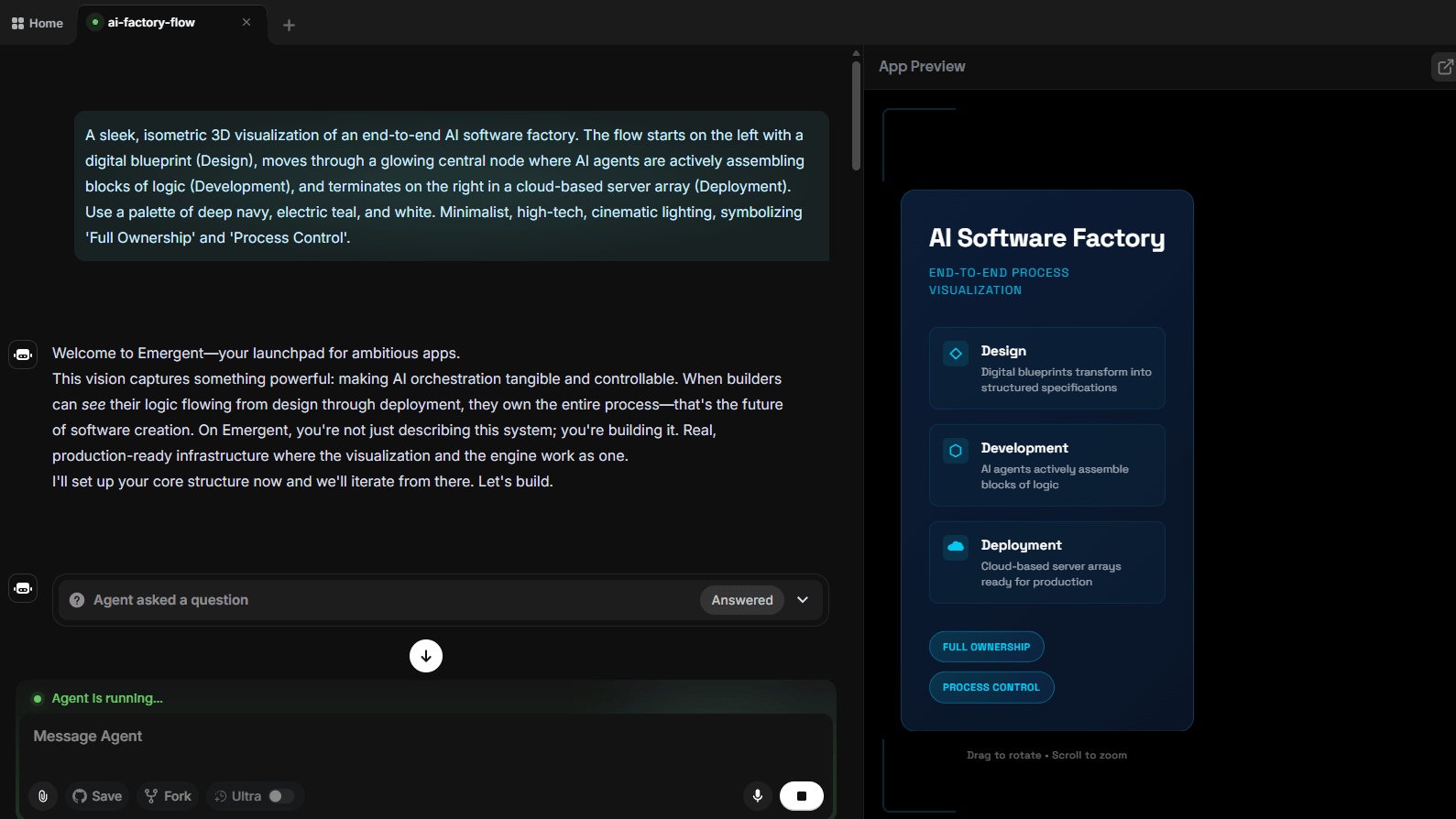
Emergent's AI agents orchestrate the full design-to-deployment workflow
One reason Emergent stands out is its clearly stated end-to-end story of AI agents that can go from design through development and deployment. While this is not just marketing speak , this represents a larger message of the company's goal to take full ownership of the build process (not simply code generation).
While Lovable can successfully deploy an application, the success of the operation will still depend heavily on the discipline of the backend team members when configuring their backend, RLS policies, secret management, function logs , all of these things are doable, however they create a level of accountability for teams as they scale from prototypes to production.
Lovable Excels Ahead of Emergent for Backend and Data-Layer Setup
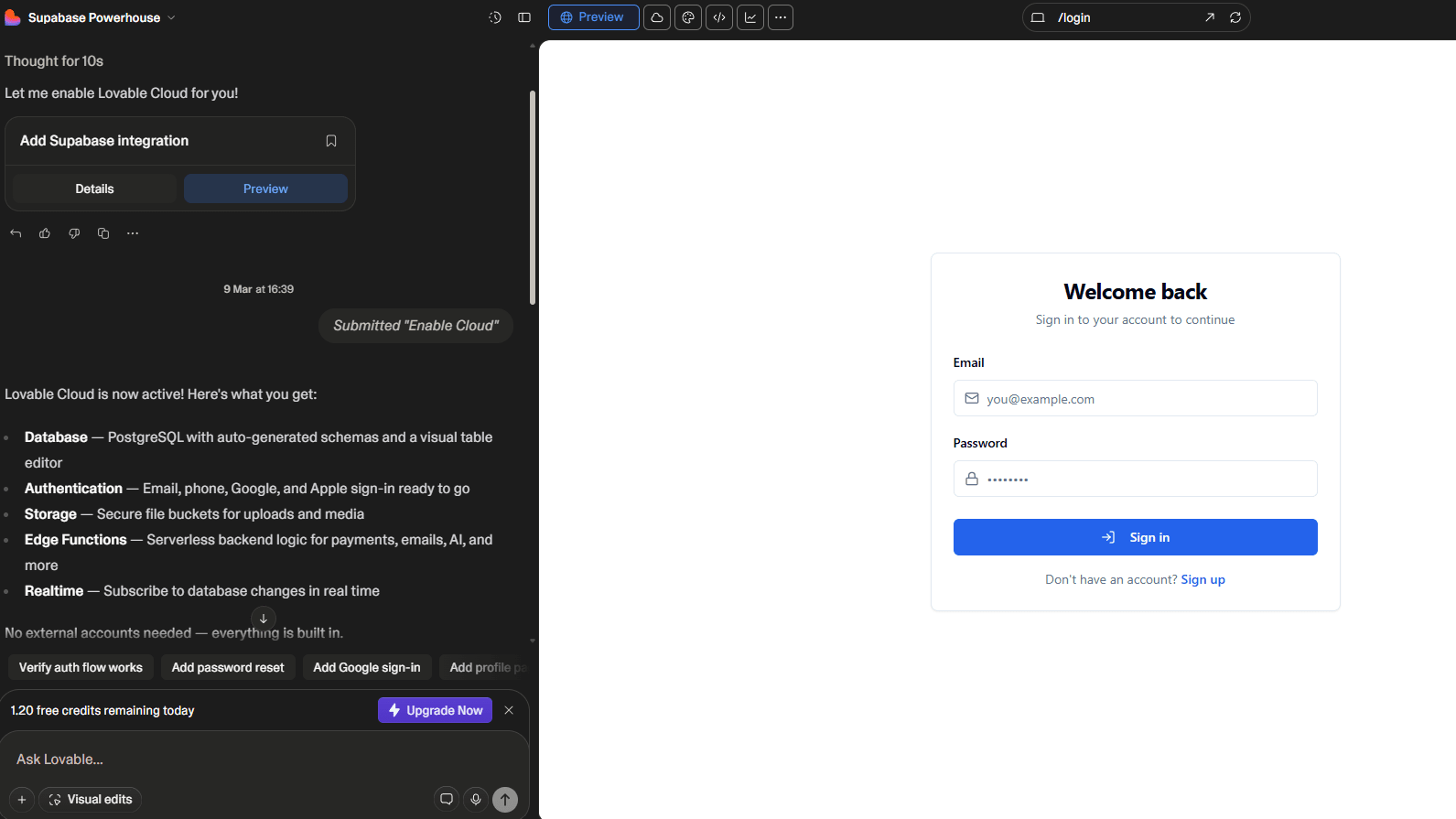
Lovable's Supabase integration instantly creates a production-ready backend
Lovable's lead is quite tangible; when you add Supabase, it is not just a database you are adding. You will receive a Postgres backend with auth, storage, real time, and edge functions that are all controlled by a chat based workflow which can generate a schema and create scaffolding of features as you define them. This is a tremendous speedup for SaaS style applications.
You can still get very strong backend logic out of Emergent, however Lovable's Supabase configuration is much easier to integrate with which will greatly reduce the amount of architectural decisions you will need to make at an early stage. In practicality, this will mean less "broken" prototype configurations (where the UI exists but the data model is either brittle or completely missing).
If your application has users, permissions and data that persists then Lovable's Supabase based workflow will typically be the quickest path to creating something you can actually deploy.
Lovable is Stronger for Conventional SaaS Integrations around Supabase

Lovable's integrations power a complete SaaS backend stack
Lovable's Supabase integration is not just about data storage; it is also about all the backend primitives that can be unlocked—authentication, file uploads, real-time updates, and server-side logic. This is essentially a modern SaaS backend "in a box" that fits perfectly with how many startups actually build.
Emergent might offer a wider range of flexibility, but Lovable has incredible alignment with exactly what a standard MVP will need by week one: sign-up, CRUD operations, permissions, and a reasonable path to production.
For founders building a familiar SaaS pattern, Lovable's integration depth is difficult to ignore.
Customer support is a tie, so validate it with a real onboarding test.
Support is generally not just about how fast a company responds; it's about whether the support team can debug the exact failure mode of your application. With AI app builders, the top blockers are almost always output failures (almost but not quite correct), schema mismatch errors, incorrect permission rules, deployment issues, and integration misconfigurations.
The easiest way to evaluate this is to pick a small subset of a larger application—a realistic app slice that includes one authentication flow, one data flow, and one integration—and treat support as part of your testing process.
You will likely learn far more from one real support interaction than you would ever learn from marketing claims.
If support is going to be a decision point for you, you'll find out quickly, because the areas of friction in a support process usually appear early.
Lovable is More User-Friendly for Typical Web App Iteration Loops
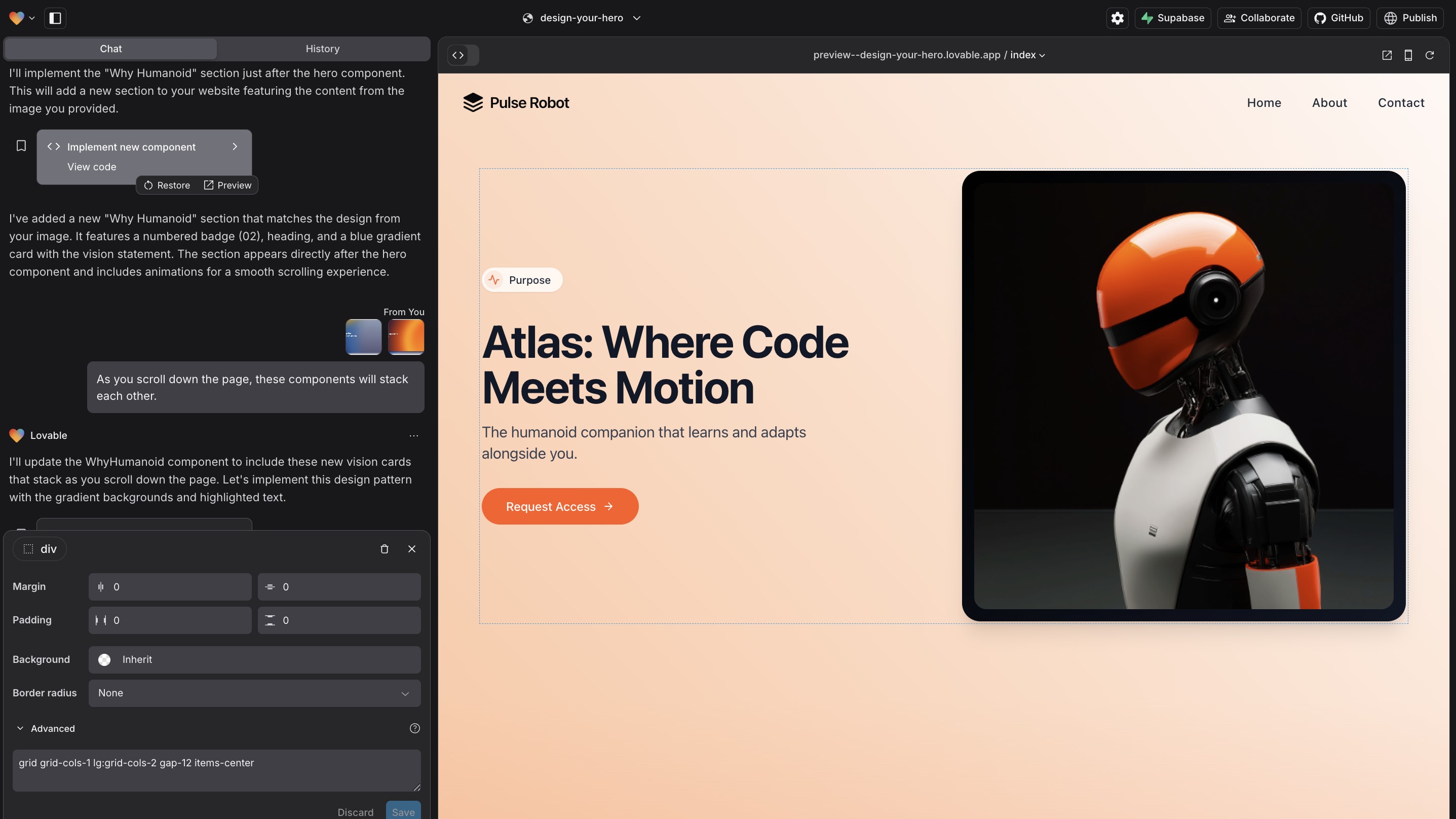
Lovable's structured workflow makes web app iteration faster
Lovable is better suited for the iterative cycle of a typical web app.
Lovable has a very structured environment because it focuses on providing a flow for typical web app use cases: build the screens; wire those screens to a real backend; and, iterate through features. This structure is reinforced through the documentation of Lovable that helps to reduce the cognitive overhead associated with non-technical individuals.
Emergent can be as quick or faster than Lovable, however Emergent tends to reward users who have a higher degree of technical proficiency: define clear prompts; make explicit the acceptance criteria; and, consider how the application will respond to both normal conditions and edge cases.
Therefore, if your organization's bottleneck is based on product iteration speed (versus the rate of throughput of engineers), Lovable is typically the less complicated day-to-day tool.
Lovable Leads on Payments Enablement with Stripe via Chat-Driven Scaffolding
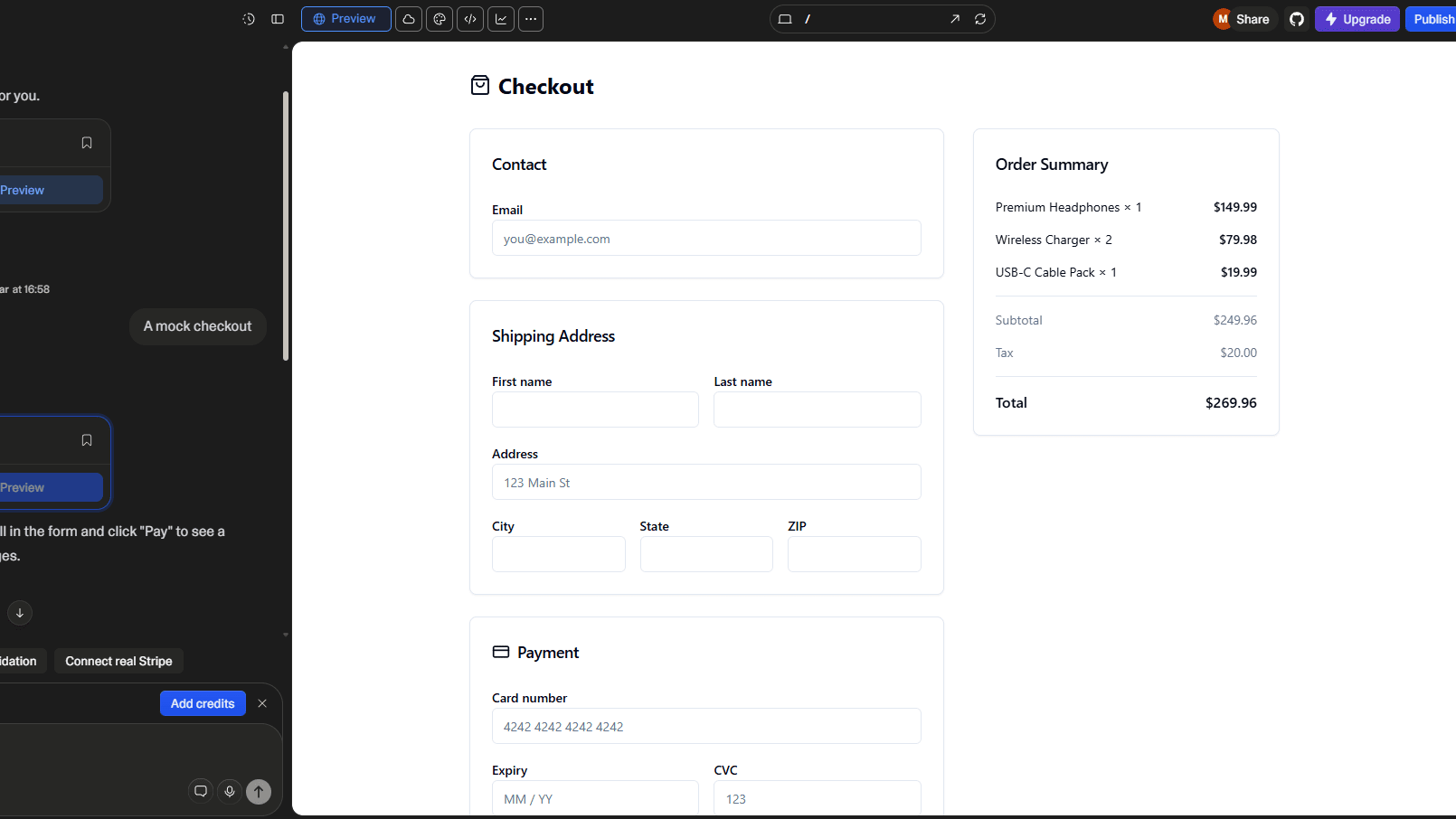
Building a Stripe checkout flow with Lovable's AI builder
Payments are one of the areas in which many AI builders quietly fail. Lovable has very detailed documentation regarding its Stripe support: it outlines creating Edge Functions and Database Tables associated with Authenticated Users, while utilizing a workflow that eliminates the need to paste secrets into the chat.
This does not eliminate the need for product-level decisions such as price tiers, entitlements, refunds, and Webhook Strategy, however Lovable's Stripe + Supabase integration can compress the amount of time required to get started with many common SaaS use-cases from days to hours.
Therefore, if revenue is a key component of your application, Lovable's Stripe + Supabase integration is likely to be a significant competitive advantage.
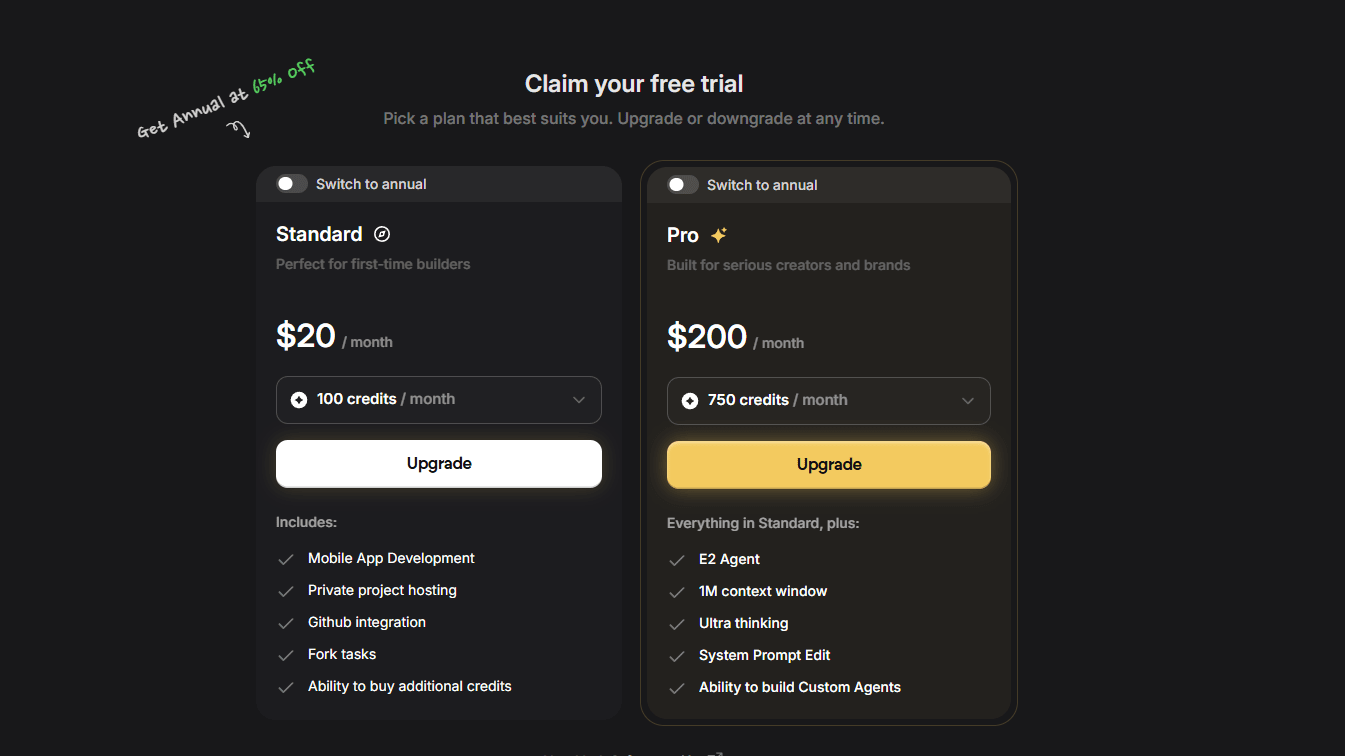
Emergent's credit-based plans offer an easy entry for AI app development
Choosing an AI app builder is often a bet: you don’t know if it will fit your build style until you’ve shipped something real. Emergent's biggest cost advantage is that you can test and evaluate a new app development tool at almost no financial risk. The Lovable pricing model is both very transparent as well as scalable; however, some teams may find the credit based models difficult to understand until they actually begin to iterate through their workflow and determine how many iterations are required for "good enough." This isn't a weakness in Lovable; this is simply a fact of life when developing software applications with AI enabled tools using the Emergent Standard plan for $1 (first month).
Lovable’s pricing is transparent and scalable, but credit-based plans can feel abstract until you measure how many iterations it takes your team to reach good enough. That’s not a flaw, just a reality of AI-driven dev workflows.
If you want the lowest friction path to prove value quickly, Emergent has the edge.
08 Emergent vs Lovable: Which is the best for your business?
Emergent is the best tool for you if:
- You want an AI build flow that’s explicitly aimed at designing, coding, and deploying end to end.
- Your team works in sprints and cares about release discipline, not just fast demos.
- You need a platform that remains useful as requirements sprawl beyond a standard web app template.
- You want to run a serious pilot with minimal cost via the Emergent promo code.
- You value repo-oriented workflows, for example, GitHub integration, as part of your build process.
 You want an AI build flow that’s explicitly aimed at designing, coding, and deploying end to end.
Lovable is the best tool for you if:
- You’re building a conventional full-stack web app and want a guided prompt-first workflow.
- You want a concrete backend path via Supabase, Postgres, auth, storage, edge functions.
- You plan to monetize quickly and benefit from Stripe scaffolding for subscriptions or one-time payments.
- You expect lots of UX and feature iteration and want a smooth daily driver for product tweaks.
- You’re ready to commit and want the Lovable discount code to reduce annual cost.
Emergent
Used by 2075 members
95% off your first month on the Standard plan
Save up to $19
Lovable
Used by 3370 members
15% off annual Pro and Business plans
Save up to $500
09 Alternatives to Emergent & Lovable

Base44
Used by 3315 members

Bubble
Used by 1764 members
30% off on monthly plans for 1 year
Save up to $957

Glide
Used by 1091 members
30% off the Maker and Business plans for 1 year
Save up to $516

Replit
Used by 558 members
10 Promotions on AI Development and Application Development software
Emergent and Lovable are great tools, but Secret offers promo codes with discounts on over 2190+ different SaaS solutions. New deals are added regularly, helping you save money on your online subscriptions. Get access to codes for other AI Development and Application Development software you might want to purchase

Deal for Microsoft Azure
$5,000 in credits for 6 months if you didn't raise funds // Up to $150,000 in credits for 2 years if you did

OpenAI - ChatGPT promotion
$300 in free credits across OpenAI's models through LLM API

Discount for Google Cloud (GCP)
$2,000 in credits for 1 year if you never raised funds // $350,000 in credits for 2 years if you did

Retool promo
1 year free on the monthly Team or Business plan

Gemini API discounts
$300 Gemini API credit

Credits for Auth0
12 months free

Promo codes for Webflow
1 year free on a CMS site plan

Mobbin offer
20% off for 1 year on the Pro plan

GitLab promotion
12 months free on the Ultimate license

Credits for AWS Activate
Up to $100,000 in credits or 20-50% off your monthly spend through an AWS partner (must be spending $100+/month)
11 Emergent vs Lovable: Conclusion
In contrast to hype, select either Emergent or Lovable based upon the manner in which you are building. Lovable is the logical choice for SaaS-shaped web applications because of its ability to integrate Supabase, create a real back-end through scaffolding, integrate Stripe, and iterate fast. Lovable's integration-based workflow will be a true advantage when your primary goal is to provide users with a working version of your application as soon as possible.
The logical choice when you want the tool to function as an end-to-end engineering workflow that continues to progress toward the development of a deployable application as your application becomes increasingly complex is Emergent. Therefore, I would recommend starting with the Emergent Standard Plan ( first month free) to validate the promo code.
Than, Compare it with Lovable by building the same application , and don’t forget to take advantage of our promo code on Lovable
Start saving on the best SaaS
Secret has already helped tens of thousands of startups save millions on the best SaaS like Microsoft Teams, Google Workspace & many more. Join Secret now to buy software the smart way.