





In today's data-driven business environment, choosing the right analytics platform is akin to analyzing key data in your organization—it can make or break your operation. In a world where every click, every view, and even every swipe is important, understanding your user behavior is not just a necessity but a competitive advantage. The right platform allows you to gather data better and more effectively, analyze it efficiently, and act on it immediately. It's about not just collecting data better but also making sense out of it. In short, it can transform the way you make your best business decisions.
In this blog, we're diving deep into a head-to-head comparison between two industry giants in the analytics world: Mixpanel and Segment. Both are considered top-notch customer data platforms that offer a plethora of features for businesses to leverage. However, they excel in different dimensions and cater to varied organizational needs.
- 01 Mixpanel vs Segment: overview
- 02 What's the difference between Mixpanel and Segment?
- 03 Mixpanel pros and cons
- 04 Segment pros and cons
- 05 Mixpanel compared to Segment
- 06 Segment compared to Mixpanel
- 07 Features comparison
- 08 Mixpanel vs Segment: Which is the best for your business?
- 09 Alternatives to Mixpanel & Segment
- 10 Promotions on Data Analytics software
Start saving on the best SaaS
Secret has already helped tens of thousands of startups save millions on the best SaaS like Microsoft Teams, Google Workspace & many more. Join Secret now to buy software the smart way.

01 Mixpanel vs Segment: overview
Mixpanel and Segment are two leading players in the realm of customer data analytics and management, each excelling in its unique ways to cater to distinct user requirements.
Mixpanel is renowned for its robust analytics capabilities. It provides a comprehensive suite of tools designed to track user behavior and engagement across web and mobile applications. In contrast, Segment offers a versatile data infrastructure platform. It allows you to collect, clean, and route customer data to various analytics and marketing tools, ensuring a unified and consistent view of your users across the entire customer journey.
Now, let's delve into the Mixpanel vs. Segment comparison to assist you in making a well-informed choice when selecting the right customer data analytics and management solution for your needs.

Customer Reviews
Both Mixpanel and Segment boast strong customer reviews, making them reputable choices. While Mixpanel has a larger number of reviews which could imply a wider user base and more tested reliability. Yet, both platforms score equally in customer satisfaction. Therefore, you may want to focus on other differentiating features for your individual scenario.

Mixpanel
Segment
Pricing Plan
Mixpanel offers a free tier that tracks 100,000 monthly users, making it an attractive option for startups or smaller businesses with limited budgets as it starts with only $20 a month.. On the other hand, Segment's starting price is $120 per month, which might be better suited for mid-sized to larger companies who are looking for more comprehensive features and can afford the cost.
Mixpanel
Segment
Product Direction
Both products are well-regarded in terms of their strategic product direction, with similar ratings. This could mean that both companies are equally adept at innovating and keeping their offerings up to date, important considerations for businesses looking for a long-term analytics partner.
Mixpanel
Segment
Business Compatibility
Segment seems to have a broader appeal across market segments, particularly resonating with mid-market companies. Mixpanel, on the other hand, appears to be more concentrated in the small-business segment. Your choice may depend on your specific business needs, including size and growth trajectory.
Mixpanel
Segment
Customer Support
While both services are generally well-regarded for their customer support, Segment holds a slight edge with a 5-star rating. This could be crucial for businesses that expect to need rapid and effective responses to any issues they may encounter, or that may need more hands-on support for setup and ongoing management.
Mixpanel
Segment
Integrations
Segment's 5-star rating indicates superior capabilities in integrating with a wide range of other software solutions like ActiveCampaign, Hotjar, and Aircall, offering greater flexibility. This is particularly useful for companies that rely on a diverse software ecosystem and wish to centralize their data analytics operations.
Mixpanel
Segment
Ease of Setup
Businesses often aim to minimize downtime and learning curves when introducing new software tools. In this respect, Segment's higher rating for ease of setup suggests that it is the quicker and simpler option for teams to start using.
Mixpanel
Segment
Ease of Admin
Ease of administration can be critical in reducing the workload for your team and avoiding errors. Segment’s higher rating in this area shows that it offers a smoother, more streamlined administrative experience, freeing your team to focus on leveraging the tool's capabilities to their fullest.
Mixpanel
Segment
Quality of Support
Support quality is crucial when you're stuck or when you're trying to get the most out of a complex tool. A 5-star rating suggests that Segment offers quicker resolutions and more helpful assistance, which can be particularly important in time-sensitive or mission-critical situations.
Mixpanel
Segment
Ease of Use
Segment leads in the ease of use category with a 5-star rating, which may be beneficial for businesses that want to onboard their staff quickly and focus on actionable insights rather than navigating a complex interface. Mixpanel is not far behind, but every point counts when considering user experience.
Mixpanel
Segment
02 What's the difference between Mixpanel and Segment?

Mixpanel's Dashboard Shows Users' Actions and Monitors Growth of Key User Groups
Mixpanel
Product analytics platform
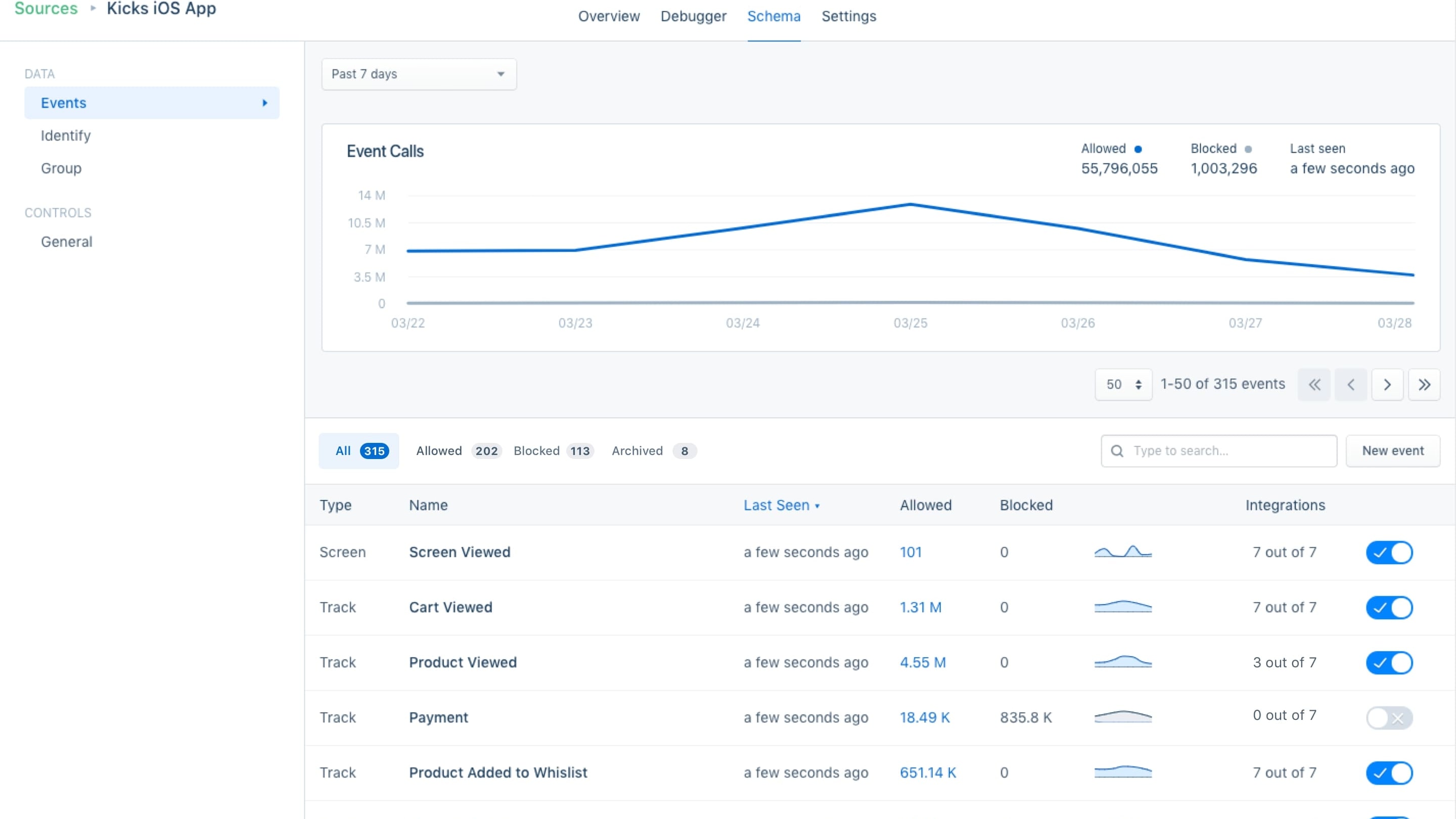
Segment's Schema Control Allowing You to Control the Data Allowed into your Destinations
Segment
Segment allows you to collect data from your web and mobile applications and provides key information about your customers and users for your marketing and product teams.
Mixpanel and Segment are both analytics platforms, but they differ significantly in their focus and functionalities. Mixpanel is primarily geared towards user analytics, enabling companies to track user interactions within their website or application in real-time. It excels in its detailed event tracking and the ability to create complex funnels, cohort analyses, and user segmentation. Mixpanel is particularly well-suited for businesses that want to gain in-depth insights into user behavior to drive engagement and growth. Its user-friendly interface is a boon for small businesses or teams without specialized data analysis skills.
On the other hand, Segment acts more as a data infrastructure platform. It allows businesses to collect customer data from various touchpoints and send it to other marketing, analytics, or data warehousing tools. Segment excels in data integration and governance. With the ability to connect with over 9,000 popular tools and robust data governance features, Segment is particularly beneficial for businesses that need to manage complex data ecosystems. Its strong suit lies in the power to centralize data collection and distribute it to multiple destinations, making it ideal for more mature companies with complex tech stacks.
In summary, while both Mixpanel and Segment are powerful in their own right, they cater to different needs. Mixpanel shines in user analytics, offering an easy-to-use platform for tracking and analyzing user interactions. Segment, in contrast, is excellent for data collection and integration, providing businesses a flexible and robust data infrastructure. Your choice between the two will depend on whether you're more focused on deep user analytics or require a comprehensive data integration solution.

Mixpanel
Premium
Product analytics platform
1 year free
Save up to $50,000
03 Mixpanel pros and cons
What are the advantages of Mixpanel?
- Deep user insights: Mixpanel allows you to gain deep insights into user behavior, enabling you to understand how users interact with your product. You can track events, funnels, retention rates, and user segmentation to identify trends and areas for improvement.

- Real-time analytics: Mixpanel provides real-time analytics, giving you immediate access to user data. This can be crucial for making timely decisions and responding quickly to changes in user behavior or market conditions.
- A/B testing: You can run A/B tests and experiments within Mixpanel to optimize your product and marketing strategies. This feature helps you make data-driven decisions and improve user engagement and conversion rates.
- Customization: Mixpanel offers a high degree of customization, allowing you to define and track custom events and properties specific to your application. This flexibility ensures that you can measure metrics relevant to your business goals.
- Integration: Mixpanel integrates with a wide range of third-party tools and platforms, including marketing automation tools, data warehouses, and CRM systems. This facilitates data sharing and allows you to combine Mixpanel data with other sources for a holistic view of your customer journey.
What are the disadvantages of Mixpanel?
- Learning curve: Mixpanel can be complex for beginners, and it may take some time to learn how to set up and use the platform effectively. The need for technical proficiency can be a barrier for some users.

- Cost: Mixpanel's pricing can become expensive as your data volume and user base grow. Small businesses and startups may find the cost prohibitive, especially if they have limited resources.
- Data sampling: In the free or lower-tier plans, Mixpanel may use data sampling for large datasets, which means you may not get a complete view of your user data. This can limit the accuracy of your analytics.
- Limited marketing features: While Mixpanel excels in user analytics, it may not provide the same breadth of marketing features as all-in-one marketing platforms like Google Analytics or HubSpot. You may need to integrate it with other marketing tools for a comprehensive solution.
- Privacy and compliance: With increasing concerns around data privacy and regulations like GDPR and CCPA, ensuring compliance when using Mixpanel can be complex. You'll need to be diligent in handling user data and obtaining necessary consents.
Compare Mixpanel to other tools


Mixpanel vs Amplitude


Hotjar vs Mixpanel

Mixpanel vs Google Analytics

Mixpanel vs CleverTap

MoEngage vs Mixpanel
04 Segment pros and cons
What are the advantages of Segment?
- Data centralization: Segment centralizes your customer data from various sources, such as websites, mobile apps, and third-party integrations. This consolidation ensures a single, unified view of your customer data across your organization.
- Simplified data integration: Segment simplifies the process of integrating with third-party tools and services. You can easily connect your data to analytics platforms, marketing automation tools, customer support systems, and more without complex development work.
- Real-time data flow: Segment offers real-time data streaming capabilities, allowing you to send data to downstream systems as soon as it's collected. This enables timely actions and insights based on fresh data.
- User privacy and compliance: Segment provides features for managing user data privacy and complying with data protection regulations like GDPR and CCPA. This helps you ensure that you handle customer data responsibly and in accordance with legal requirements.
- Flexibility and customization: Segment allows for custom data tracking and event definitions, enabling you to tailor the platform to your specific business needs. You can capture and route data in a way that aligns with your unique requirements.
What are the disadvantages of Segment?
- Cost: Segment's pricing can be relatively high, particularly as your data volume and usage grow. Small businesses and startups may find it expensive, especially when factoring in the costs of connecting multiple tools.
- Complexity: While Segment simplifies data integration, setting up and configuring the platform can be complex, especially for users with limited technical expertise. Implementation may require developer involvement.
- Learning curve: Users new to Segment may face a learning curve in understanding its features and capabilities. Proper training and documentation are essential for making the most of the platform.
- Data latency: In some cases, there may be latency in data processing and delivery, which could affect the timeliness of insights and actions based on that data.
- Dependency on third parties: Since Segment relies on integrations with various third-party tools and services, any issues with those integrations or the availability of those services can impact your data flow and analytics capabilities.
Compare Segment to other tools

Segment vs Amplitude
05 Mixpanel compared to Segment
When comparing Mixpanel and Segment, Mixpanel stands out with its powerful user analytics and behavior tracking features. It is an ideal choice for users looking to gain deep insights into how customers interact with their web and mobile applications. Mixpanel's strength lies in its ability to provide comprehensive data analytics and real-time user tracking.
The decision between Mixpanel and Segment depends on your specific data infrastructure and analytics needs. Mixpanel excels in its analytics capabilities, offering granular insights into user behavior. On the other hand, Segment provides a versatile data infrastructure platform for centralizing and routing customer data to various tools and services.
Is Mixpanel better than Segment?
 Is Mixpanel better than Segment?
Determining whether Mixpanel is better than Segment depends on your specific data analytics and management requirements. Mixpanel stands out for its robust user analytics and behavior tracking capabilities, making it an excellent choice for users seeking in-depth insights into user interactions with their applications. Its strengths lie in providing granular data analytics and real-time tracking.
On the other hand, Segment offers a versatile data infrastructure platform designed for centralizing and routing customer data to various tools and services, simplifying data management and integration. The decision between Mixpanel and Segment hinges on whether you prioritize advanced user analytics or streamlined data infrastructure and integration within your data strategy.
What is Mixpanel best used for?
Mixpanel is primarily best used for advanced user analytics and behavior tracking in web and mobile applications. It is an invaluable tool for businesses and product teams seeking in-depth insights into how users interact with their digital products. Mixpanel empowers users to track and analyze user behavior, perform cohort analysis, and measure the effectiveness of features or campaigns.
With Mixpanel, you can create custom events, funnels, and retention reports to understand user engagement and retention rates. It is particularly well-suited for businesses aiming to make data-driven decisions, optimize user experiences, and enhance product engagement. Mixpanel's strength lies in its ability to provide granular user analytics, making it an essential tool for improving digital product performance and user satisfaction.
Can Mixpanel replace Segment?
Whether Mixpanel can replace Segment depends on your specific data infrastructure and analytics needs. Mixpanel is a powerful tool for in-depth user analytics and behavior tracking in web and mobile applications. It excels in providing granular insights into how users interact with your digital products.
On the other hand, Segment offers a versatile data infrastructure platform for centralizing and routing customer data to various tools and services, simplifying data management and integration. The decision between Mixpanel and Segment hinges on whether you prioritize advanced user analytics or streamlined data infrastructure and integration within your data strategy. Mixpanel excels in specialized user analytics, while Segment offers a broader solution for data management and integration across your entire tech stack.
Is Mixpanel cheaper than Segment?
When it comes to pricing, it's important to consider the differences between Mixpanel and Segment. Mixpanel's pricing structure can potentially be more cost-effective for businesses, as it often centers around the volume of data and the specific analytics features you require. This flexibility can be advantageous for businesses looking to match their expenses with their actual data analytics needs.
On the other hand, Segment utilizes a pricing model that can become more expensive as your data integration and usage requirements grow. While Segment offers a free plan for basic data routing, accessing advanced features and accommodating larger data volumes may involve higher costs. Therefore, your choice between Mixpanel and Segment should take into account your budget constraints and the scalability of your data analytics and management needs.
Is there a better Data Analytics software than Mixpanel?
When evaluating Mixpanel, it's important to explore whether there might be a more suitable software for your specific data analytics and user behavior tracking needs.
Several notable alternatives to Mixpanel in the customer analytics and behavior tracking space include Google Analytics, Amplitude, Heap Analytics, and Kissmetrics.
The choice of customer analytics software depends on your organization's unique objectives, budget, and the depth of insights and analytics capabilities you require. While Mixpanel is a powerful tool for user analytics, other platforms may offer different features, pricing structures, or integrations that better align with your data analytics and user tracking goals. It's essential to assess these alternatives to determine the best fit for your specific use case.
Mixpanel
Premium
Product analytics platform
1 year free
Save up to $50,000
06 Segment compared to Mixpanel
When comparing Segment and Mixpanel, it's essential to consider their distinct strengths and use cases.
Segment offers a versatile data infrastructure platform designed to centralize and route customer data to various tools and services. It simplifies data management and integration, making it an excellent choice for businesses aiming to streamline their data operations and create a unified customer data ecosystem.
The choice between Segment and Mixpanel depends on your specific data analytics and management requirements. If you prioritize advanced user analytics and granular insights, Mixpanel may be the better choice. However, if you need a robust data infrastructure and integration platform to unify your data ecosystem, Segment could be the more suitable option.
Is Segment better than Mixpanel?
Determining whether Segment is better than Mixpanel depends on your specific data analytics and management needs and objectives. Segment offers a versatile data infrastructure platform designed to centralize and route customer data to various tools and services, simplifying data management and integration. If you prioritize streamlined data operations and the creation of a unified customer data ecosystem, Segment may be the preferable choice.
However, it's crucial to acknowledge that Mixpanel excels in providing robust user analytics and behavior tracking features. It is an ideal solution for businesses seeking granular insights into how users interact with web and mobile applications. If your primary focus is on advanced user analytics and real-time tracking, Mixpanel remains a compelling option.
What is Segment best used for?
Segment is a versatile and powerful customer data infrastructure platform, making it best used for businesses looking to centralize and manage their customer data effectively. It excels in simplifying data integration and routing, allowing you to collect, clean, and send customer data to various tools and services seamlessly.
Furthermore, Segment's flexibility and customization options make it a versatile choice for tailoring your data infrastructure to meet your specific business needs. Whether you need to enhance analytics, support marketing automation, or improve user experience, Segment provides a robust foundation for building a comprehensive customer data ecosystem.
Can Segment replace Mixpanel?
Determining whether Segment can effectively replace Mixpanel depends on your specific data analytics and user behavior tracking needs. Segment is a versatile data infrastructure platform designed to centralize and route customer data to various tools and services, simplifying data management and integration across your organization.
The decision between Segment and Mixpanel should align with your unique data strategy and objectives. If you prioritize streamlined data infrastructure and integration for a unified customer data ecosystem, Segment may be a suitable replacement. However, if you require advanced user analytics and behavior tracking, Mixpanel's specialized capabilities may be the better fit for your needs.
Is Segment cheaper than Mixpanel?
When evaluating the cost of Segment and Mixpanel, it's crucial to consider their distinct pricing structures. Segment's pricing model is typically based on factors like data volume and the specific features you need. This approach can provide flexibility, allowing you to tailor your expenses to your actual data analytics and management requirements.
On the contrary, Mixpanel may have a different pricing model, potentially involving a fixed fee or other considerations. Depending on your usage and data analytics needs, Mixpanel's pricing structure may vary. The cost comparison between Segment and Mixpanel depends on your specific data infrastructure and analytics needs.
Is there a better Cloud And Data Management software than Segment?
When considering Segment, it's important to explore whether there might be a more suitable software solution for your specific data analytics and management needs.
Several notable alternatives to Segment in the data infrastructure and analytics space include Snowplow Analytics, mParticle, Tealium, and Amplitude.
The choice of data infrastructure and analytics software should align with your unique data strategy, budget, and the depth of features required. While Segment offers a versatile data management and integration platform, other solutions may provide different features, pricing structures, or integrations that better match your data analytics and management objectives.
07 Features comparison
Segment Provides Better Data Storage and Analysis than Mixpanel

Segment simplifies data management by centralizing and analyzing all your data within a unified platform, eliminating the necessity for numerous tools or databases.
Segment simplifies data management by centralizing and analyzing all your data within a unified platform, eliminating the necessity for numerous tools or databases. In contrast, Mixpanel, despite its robust analytics capabilities, does not provide the same level of convenience regarding comprehensive data storage and analysis. Segment's streamlined approach not only enhances efficiency but also ensures data consistency, making it an excellent choice for businesses seeking a centralized and hassle-free solution for their data infrastructure needs.
While Mixpanel excels in analytics, the consideration between the two should revolve around your preferences for data consolidation and ease of management alongside analytical prowess.
Segment is Best for Real-Time Audience Analysis Compared to Mixpanel
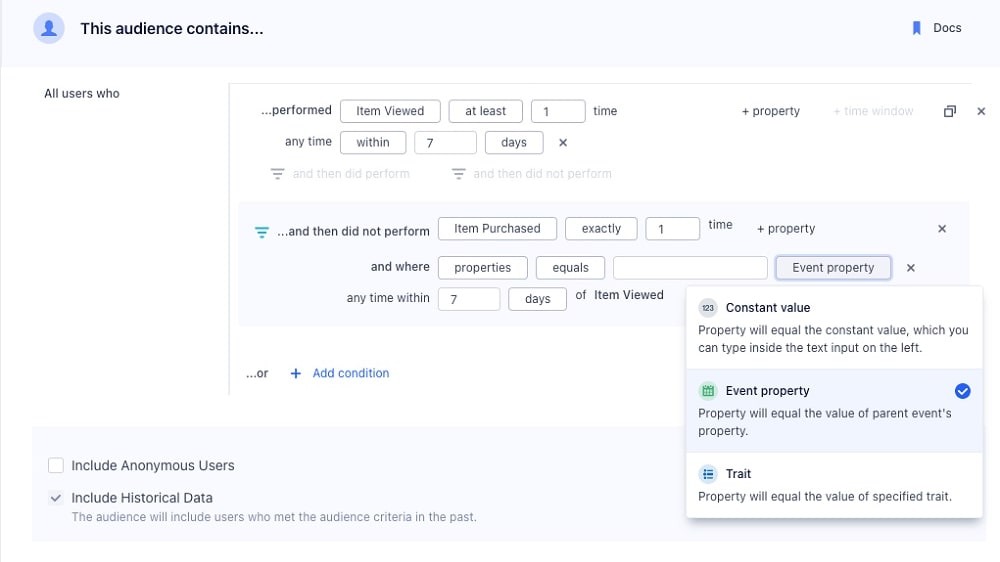
Segment holds a distinct advantage in real-time audience analysis, empowering businesses to deliver content that is precisely tailored to the right user at the right moment.
Segment holds a distinct advantage in real-time audience analysis, empowering businesses to deliver content that is precisely tailored to the right user at the right moment. This capability allows for dynamic, immediate responses to user behaviors and preferences.
Conversely, Mixpanel offers cohort analysis, which facilitates the grouping of users based on behaviors or properties. However, it's important to note that Mixpanel's cohort analysis is not primarily designed for real-time content delivery. Therefore, if your goal is to engage users with timely and personalized content as they interact with your platform, Segment's real-time capabilities make it a superior choice for optimizing user experiences and engagement strategies.
Segment Outshines Mixpanel for its More Robust Integration Options

Remarkably, Segment boasts an impressive portfolio of over 300 integrations spanning a wide spectrum of tools, including analytics, email marketing, data warehouses, and beyond.
Segment stands out prominently in the realm of integration capabilities. Serving as a robust data switchboard, it excels at gathering data from a plethora of sources and effortlessly transmitting it to a vast array of destinations. Remarkably, Segment boasts an impressive portfolio of over 300 integrations spanning a wide spectrum of tools, including analytics, email marketing, data warehouses, and beyond.
While Mixpanel does offer a respectable selection of integrations, it falls slightly short of Segment's extensive repertoire. Consequently, if your primary imperative lies in achieving seamless data integration across numerous tools and platforms, Segment emerges as the superior choice. Its unparalleled integration prowess makes it a top contender for businesses seeking a comprehensive solution for their data connectivity needs.
Mixpanel Excels Ahead of Segment at Event Tracking

Mixpanel's strength lies in its precision, allowing you to monitor individual user actions with granularity, including clicks, sign-ups, purchases, and specific interactions.
Mixpanel and Segment, while offering user behavior tracking capabilities, adopt distinct approaches. Mixpanel's strength lies in its precision, allowing you to monitor individual user actions with granularity, including clicks, sign-ups, purchases, and specific interactions.
In contrast, Segment takes a broader perspective by tracking customer behavior across multiple channels, making its data analysis less precise but more comprehensive. The choice between the two depends on your analytical needs; Mixpanel excels in detailed, event-specific tracking, while Segment provides a comprehensive overview across various touchpoints.
Mixpanel is More Advantageous than Segment When Creating User Profiles

Mixpanel excels in constructing comprehensive user profiles that evolve over time.
Mixpanel excels in constructing comprehensive user profiles that evolve over time. This proficiency empowers businesses to gain profound insights into their audience, facilitating the delivery of highly personalized experiences. In contrast, Segment focuses on centralizing contact information, serving as a pivotal data hub, yet its primary emphasis doesn't revolve around analyzing individual behavioral patterns. Instead, Segment's core purpose lies in aggregating data from diverse touchpoints.
The distinction between Mixpanel and Segment centers on the depth of data analysis and personalization. Mixpanel's forte is the meticulous examination of user behavior for tailored experiences, while Segment excels as a data consolidation platform.
Segment Surpasses Mixpanel for Mobile App Performance Tracking

Segment distinguishes itself by offering specialized functionalities for monitoring mobile app performance.
Although both tools facilitate user behavior tracking, Segment distinguishes itself by offering specialized functionalities for monitoring mobile app performance. This elevated focus on mobile app optimization positions Segment as the preferred choice for businesses with a specific interest in enhancing their mobile application's performance and user experience.
With Segment's tailored capabilities, organizations can gain deeper insights into user interactions within their mobile apps, enabling them to make data-driven decisions for more effective mobile app optimization strategies. Therefore, if mobile app performance is a primary concern for your business, Segment's dedicated features make it a valuable asset in your analytics toolkit.
Segment Provides More User-Friendly Compared to Mixpanel
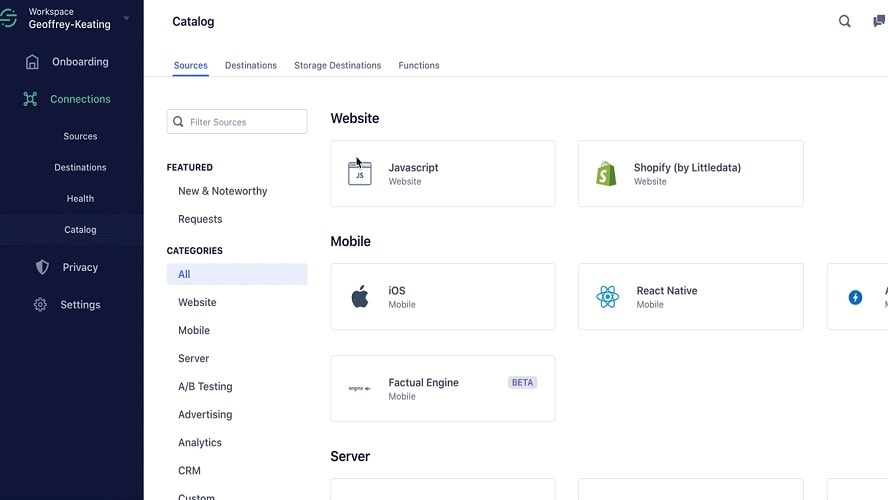
Segment's strength lies in its ability to streamline the process of collecting, organizing, and routing customer data, making it a valuable tool for businesses seeking a straightforward data infrastructure solution.
Segment surpasses Mixpanel in terms of user-friendliness and ease of use. Its intuitive interface and simplified data management make it accessible to users with varying levels of technical expertise. Segment's strength lies in its ability to streamline the process of collecting, organizing, and routing customer data, making it a valuable tool for businesses seeking a straightforward data infrastructure solution.
On the other hand, Mixpanel, while powerful in its analytics capabilities, may have a steeper learning curve and require more technical proficiency. The choice between Segment and Mixpanel should consider your team's skillset and the ease with which you can achieve your data analytics goals.
08 Mixpanel vs Segment: Which is the best for your business?
Mixpanel is the best tool for you if:
- You seek in-depth user analytics to understand customer behavior and optimize product experiences.
- A/B testing and experimentation are central to your product development and optimization strategy.
- You require cohort analysis and retention tracking to measure user engagement and long-term value.
- Real-time data insights and alerts are critical for proactive decision-making and user engagement.
- You want a user-friendly platform that empowers non-technical teams to access and analyze data for actionable insights.
 You seek in-depth user analytics to understand customer behavior and optimize product experiences.
Segment is the best tool for you if:
- You need to centralize and streamline the management of customer data across various platforms and tools.
- Data integration and routing are critical to your organization's data strategy.
- You seek a versatile and scalable solution for unifying customer data from multiple sources.
- Ensuring data accuracy and compliance with privacy regulations is a top priority for your business.
- You aim to simplify the process of collecting and distributing customer data across your tech stack for comprehensive analytics and insights.
Mixpanel
Premium
Product analytics platform
1 year free
Save up to $50,000
09 Alternatives to Mixpanel & Segment

Slack
Used by 3704 members
25% off new plan purchases
Save up to $9,000

Sentry
Used by 1188 members
6 months free on the Teams plan
Save up to $180

Hotjar
Used by 962 members
40% off all annual plans
Save up to $928

Amplitude
Used by 518 members
3 months free on the Plus plan
Save up to $183
10 Promotions on Data Analytics software
Mixpanel and Segment are great tools, but Secret offers promo codes with discounts on over 2190+ different SaaS solutions. New deals are added regularly, helping you save money on your online subscriptions. Get access to codes for other Data Analytics software you might want to purchase
Code for Hotjar
40% off all annual plans

Credits for AWS Activate
Up to $100,000 in credits or 20-50% off your monthly spend through an AWS partner (must be spending $100+/month)

Discount for Google Cloud (GCP)
$2,000 in credits for 1 year if you never raised funds // $350,000 in credits for 2 years if you did

DigitalOcean coupon code 2026
$200 in credits

Google Ads promo
Spend $500, get $500 // Spend $1,000, get $750 // Spend $1,500, get $1,000 in FREE ad credit

Promo code Microsoft for Startups
$5,000 credit for 6 months

Semrush discounts
14 days free on Semrush One

Deal for Microsoft Azure
$5,000 in credits for 6 months if you didn't raise funds // Up to $150,000 in credits for 2 years if you did
Amplitude offer
3 months free on the Plus plan

Discount for OVHcloud
€10,000 in credits for 1 year
Start saving on the best SaaS
Secret has already helped tens of thousands of startups save millions on the best SaaS like Microsoft Teams, Google Workspace & many more. Join Secret now to buy software the smart way.