





Ensuring solid financial management for your business is crucial, enabling you to navigate the complexities of transactions, expenses, and growth. However, with numerous fintech solutions available, selecting the right fit can be daunting.
In this overview, we delve into the distinctive attributes of Qonto vs Revolut, shedding light on their core functionalities and variations. By examining their features, transaction capabilities, and user experiences, we aim to provide clarity in your decision-making process, assisting you in choosing the ideal financial tool to propel your business towards financial efficiency and success.
- 01 Qonto vs Revolut: overview
- 02 What's the difference between Qonto and Revolut?
- 03 Qonto pros and cons
- 04 Revolut pros and cons
- 05 Qonto compared to Revolut
- 06 Revolut compared to Qonto
- 07 Features comparison
- 08 Qonto vs Revolut: Which is the best for your business?
- 09 Alternatives to Qonto & Revolut
- 10 Promotions on Accounting software
Start saving on the best SaaS
Secret has already helped tens of thousands of startups save millions on the best SaaS like Microsoft Teams, Google Workspace & many more. Join Secret now to buy software the smart way.

01 Qonto vs Revolut: overview
Qonto and Revolut stand as prominent players in the realm of online banking and fintech solutions, each offering distinct advantages tailored to varying financial needs.
Qonto is acclaimed for its seamless business banking experience, providing efficient transaction management and expense tracking. With user-friendly interfaces and specialized business features, Qonto streamlines financial operations for entrepreneurs and businesses alike. In contrast, Revolut shines with its comprehensive suite of financial tools, extending beyond banking to include international payments, expense management, and currency exchange.
Now, let's delve into the comparison of Qonto vs Revolut. We'll explore their core functionalities and benefits to empower you in making an informed choice for optimizing your financial operations and propelling your business towards financial success.

Pricing plans
Both platforms offer transparent pricing, allowing you to choose the plan that suits your financial management needs, with Revolut also offering free options.

Qonto
Revolut
Positive reviews
Both Qonto and Revolut have received positive reviews from users for seamless business banking and financial tools.
Qonto
Revolut
Ease of use
Qonto stands out for its user-friendly interface and straightforward navigation, while Revolut’s diverse features may require familiarization.
Qonto
Revolut
Regulatory compliance
Both Qonto and Revolut prioritize regulatory compliance, ensuring secure financial transactions.
Qonto
Revolut
Multi-currency accounts
Revolut shines when it comes to multi-currency accounts. It offers seamless and real-time currency exchange at interbank rates
Qonto
Revolut
Advanced reporting
Both Qonto and Revolut offer robust reporting features, allowing you to gain insights into your business finances.
Qonto
Revolut
Customer support
Qonto offers 24/7 customer support through chat and phone for all users, while Revolut also provides round-the-clock support even to free customers.
Qonto
Revolut
Expense tracking
Qonto offers robust expense tracking features, allowing you to easily categorize and track business expenses.
Qonto
Revolut
Team collaboration
Qonto’s multi-user accounts and permission levels empower teams to work together seamlessly while maintaining financial control.
Qonto
Revolut
Integrations
Revolut boasts a wider range of third-party app integrations than Qonto, including Zapier, Slack, QuickBooks and FreeAgent.
Qonto
Revolut
02 What's the difference between Qonto and Revolut?
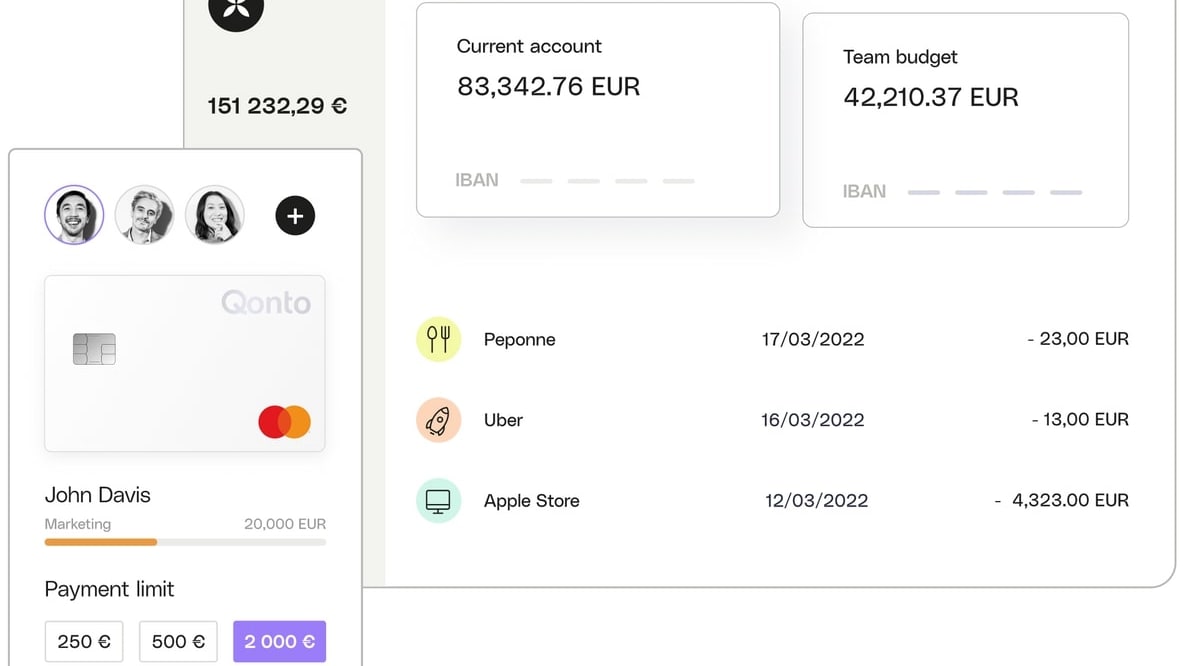
Qonto's Team Expense Control with Clear Views of Transaction History
Qonto
The all-in-one business account

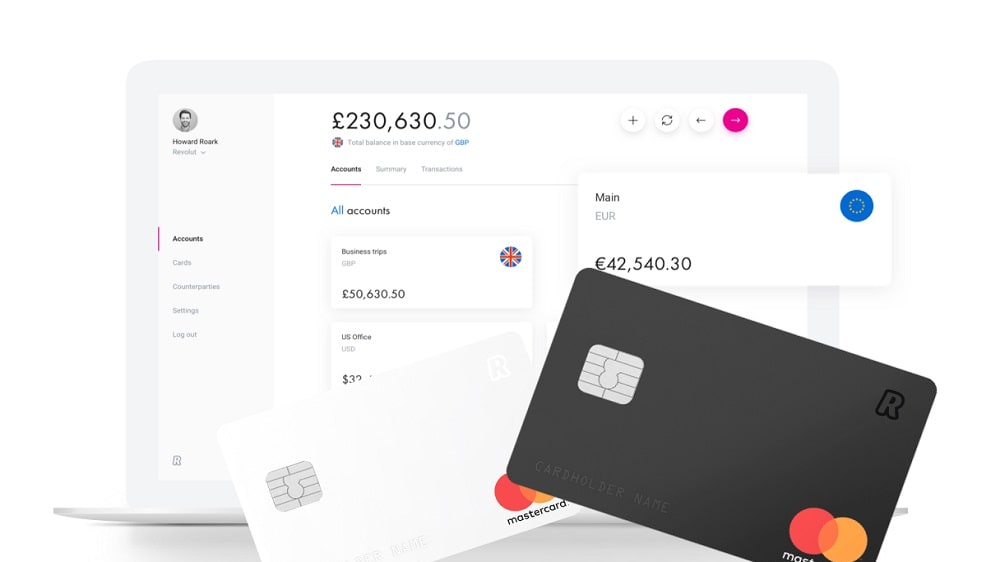
Revolut's Multi-Currency Accounts to Send and Receive Funds in Different Currencies
Revolut
Revolut Business is an online account for professionals. Multi-currency, it allows you to easily trade internationally. Thanks to its comprehensive and easy-to-use features, this internet banking account is suitable for all types of businesses.
When faced with the decision between Qonto and Revolut, it's essential to explore the distinct attributes that set these two fintech solutions apart. While both cater to businesses, they excel in different aspects of financial management.
Qonto takes the lead in fostering seamless team collaboration and providing meticulous expense tracking capabilities. This makes it an ideal choice for businesses that prioritize effective teamwork and stringent control over expenditures. Qonto's standout features include multi-user accounts and granular permission settings, creating an environment where teams can collaborate harmoniously while maintaining vigilant financial oversight. The convenience of shared access, coupled with controlled permissions, not only promotes unity among team members but also safeguards the integrity of financial operations.
On the other hand, Revolut distinguishes itself with its strengths in multi-currency accounts and advanced reporting, making it particularly attractive to businesses engaged in global operations. Revolut's real-time currency exchange at interbank rates simplifies international transactions while minimizing costs, offering a competitive advantage. Additionally, Revolut provides robust reporting tools that offer invaluable insights into spending patterns. This empowers businesses with the information necessary to make well-informed financial decisions, steering their endeavors towards profitability.
The choice between Qonto and Revolut ultimately depends on your business's unique needs and strategic priorities. If your enterprise thrives on collaborative synergy and meticulous expense management, Qonto is the ideal solution to enhance your financial efficiency. Conversely, if your operations extend across international borders and require in-depth financial analysis, Revolut is ready to provide the edge you need to navigate the complexities of global finance effectively.

Qonto
The all-in-one business account
2 months free on the Basic and Smart plans
Save up to $100
03 Qonto pros and cons
What are the advantages of Qonto?
- Effortless team collaboration: Qonto shines in team collaboration, offering multi-user accounts and granular permission settings, promoting seamless teamwork while ensuring financial oversight.

- Meticulous expense tracking: Businesses benefit from Qonto's meticulous expense tracking tools, helping maintain stringent control over expenditures and budget management.
- User-friendly interface: Qonto's intuitive platform simplifies financial management, making it accessible even for those without extensive financial expertise.
- Tailored for businesses: Qonto's features, from invoicing to automated categorization, are designed with businesses in mind, addressing their unique financial needs.
- Responsive customer support: Qonto's customer support provides prompt assistance, helping businesses navigate any challenges they encounter.
What are the disadvantages of Qonto?
- Limited global reach: While Qonto caters well to local businesses, its international offerings may be less comprehensive compared to other fintech solutions.

- Cost considerations: Qonto's pricing structure, while competitive, may not be the most budget-friendly option for startups or very small businesses.
- Integration options: While Qonto offers integration with various accounting tools, its range of integrations may be more limited compared to other platforms.
- Transaction limits: Depending on the subscription plan, Qonto imposes transaction limits, which could be a concern for high-volume businesses.
- Advanced reporting: While Qonto provides solid financial tracking, businesses requiring more advanced and customizable reporting may find the options somewhat limited.
Compare Qonto to other tools


Shine vs Qonto

04 Revolut pros and cons
What are the advantages of Revolut?
- Multi-currency excellence: Revolut's standout feature is its seamless multi-currency accounts, allowing businesses to conduct international transactions and currency exchanges at interbank rates.
- Advanced reporting: Revolut offers robust reporting tools that provide valuable insights into spending patterns, aiding businesses in making informed financial decisions.
- Versatile financial tools: Beyond banking, Revolut provides a range of financial tools, including expense management, budgeting, and investment options, enhancing overall financial control.
- User-friendly app: Revolut's user-friendly mobile app offers convenience for businesses on the go, simplifying financial management and transactions.
- Global accessibility: Revolut's wide global reach and compatibility make it suitable for businesses with international operations, making cross-border transactions smoother.
What are the disadvantages of Revolut?
- Customer support challenges: Some users have reported challenges with Revolut's customer support, with delays in resolving issues.
- Learning curve: Due to its comprehensive range of features, new users may experience a learning curve while navigating Revolut's diverse functionalities.
- Cost implications: While offering free plans, some premium features and transactions may incur fees, potentially impacting the overall cost-effectiveness for certain businesses.
- Lack of physical branches: Revolut operates mainly online, which might pose challenges for businesses that prefer or require in-person banking services.
- Regulatory complexity: Revolut's rapid expansion has led to regulatory scrutiny in some regions, potentially causing uncertainties for businesses operating in those areas.
Compare Revolut to other tools


Airwallex vs Revolut

Revolut vs Wise

Revolut vs N26
05 Qonto compared to Revolut
When comparing Qonto and Revolut, Qonto shines with its seamless team collaboration and meticulous expense tracking. Multi-user accounts and granular permission settings foster teamwork while ensuring financial control. On the other hand, Revolut stands out for its multi-currency accounts and advanced reporting, catering well to businesses with international operations.
Qonto excels in providing specialized financial solutions for businesses, while Revolut offers a broader range of versatile financial tools. The decision between Qonto and Revolut rests on the nature of collaboration and financial needs, each offering unique strengths to empower businesses in their financial management journey.
Is Qonto better than Revolut?
 Is Qonto better than Revolut?
Determining whether Qonto surpasses Revolut depends on the specific context of your business.
Qonto, tailored for businesses, startups, and freelancers, offers a focused approach to professional banking. For instance, Qonto's multi-user accounts and detailed permission settings ensure efficient team collaboration, a valuable asset for growing businesses. In contrast, Revolut boasts a broader scope, serving personal and business needs alike. Its extensive features encompass multi-currency transactions, expense management, and advanced reporting.
If your business seeks specialized financial solutions and streamlined teamwork, Qonto shines. However, if versatility and comprehensive offerings are vital, Revolut's diverse capabilities may prove more advantageous.
What is Qonto best used for?
Qonto excels in offering a user-centric platform that elegantly simplifies the intricate landscape of business banking. Its prime application is providing an all-encompassing banking solution tailored to small and medium-sized enterprises (SMEs), startups, and self-employed professionals.
For instance, Qonto's robust expense management features facilitate meticulous tracking and categorization of transactions, ensuring financial clarity and compliance. Its seamless integration with accounting tools, such as Xero or QuickBooks, expedites financial reporting and reconciliation, allowing businesses to allocate more time and resources towards strategic growth initiatives.
By effortlessly navigating financial intricacies, Qonto empowers businesses to optimize their operations and concentrate on expanding their horizons.
Can Qonto replace Revolut?
Determining whether Qonto can serve as a replacement for Revolut depends on specific business needs. While they share a realm, their target markets diverge. For instance, if a business seeks a comprehensive offering spanning personal and business banking, Revolut's versatility shines.
However, Qonto steps in as a suitable substitute when specialized, user-centric business banking is the priority. Take, for instance, a startup solely focused on streamlining financial operations. By embracing Qonto, they attain a dedicated platform tailored to their professional requirements, potentially eliminating the need for the broader spectrum offered by Revolut.
Is Qonto cheaper than Revolut?
When comparing Qonto's affordability with Revolut, notable distinctions emerge in their pricing models. Revolut presents a free plan, while Qonto's plans commence from €11 per month for Company Creators plans.
Delving deeper than the surface cost unveils the true value proposition. For instance, consider a growing startup necessitating multi-user accounts and specialized business tools. The marginally higher expense of Qonto becomes a justifiable investment when tailored features, like detailed expense categorization and advanced reporting, align intricately with the company's evolving financial demands.
While Revolut's cost-effectiveness remains evident, Qonto's expanded offerings might offer a more targeted and value-rich solution for businesses seeking heightened financial management precision.
Is there a better Accounting software than Qonto?
When evaluating banking software alternatives to Qonto, it's crucial to acknowledge the diversity of options available, each catering to distinct business needs.
For instance, Revolut, Wise, Shine, Xero, and Spendesk are noteworthy contenders that offer comparable features and services to Qonto.
Determining the optimal banking software for your business hinges on aligning the tool's functionalities, pricing, and strategic goals with your unique requirements. Just as various banking tools complement different digital banking needs, the choice between Qonto and its counterparts should be guided by a meticulous assessment of their capabilities and compatibility with your financial management objectives.
Qonto
The all-in-one business account
2 months free on the Basic and Smart plans
Save up to $100
06 Revolut compared to Qonto
Comparing Revolut and Qonto, Revolut excels with its versatile multi-currency accounts and advanced reporting capabilities. Revolut's multi-currency functionality simplifies international transactions and offers favorable exchange rates, catering to businesses with global operations. Moreover, Revolut's robust reporting tools provide valuable insights into spending patterns, aiding businesses in informed financial decision-making.
Revolut proves beneficial for businesses seeking international financial flexibility and detailed financial insights, while Qonto caters well to those emphasizing teamwork and precise financial management. The choice between Revolut and Qonto hinges on a business's specific needs and strategic priorities, each platform offering distinct advantages to enhance financial efficiency.
Is Revolut better than Qonto?
Whether Revolut outperforms Qonto depends entirely on your specific business needs. Revolut offers a broader range of services, catering to both personal and business users. If your venture requires an all-encompassing financial ecosystem that handles personal and professional transactions seamlessly, Revolut's versatility makes it the superior choice.
Conversely, when precise business banking functionalities take precedence, Qonto's tailored offerings position it as the more suitable option. Choosing between Revolut and Qonto should be a strategic decision rooted in your unique financial management priorities.
What is Revolut best used for?
Revolut's exceptional versatility shines through in its ability to seamlessly blend personal and business banking, making it an all-encompassing financial solution. Its extensive range of features spans foreign exchange, cryptocurrency capabilities, robust budgeting tools, savings options, and traditional banking functionalities. This versatility makes it an ideal choice for individuals and enterprises seeking a holistic and comprehensive banking solution.
For example, frequent travelers and businesses involved in global trade find immense value in Revolut's ability to seamlessly handle international transactions within its comprehensive framework. In essence, Revolut caters to those who seek a unified platform that effortlessly addresses a spectrum of financial needs, elevating their financial endeavors to new heights.
Can Revolut replace Qonto?
Revolut has the potential to step into Qonto's role seamlessly, especially for individuals and entities looking for a broader service spectrum that includes personal banking aspects. However, when catering to the specific needs of businesses requiring a streamlined, business-focused financial platform, Qonto stands as the superior choice.
For instance, startups and small enterprises may find Qonto's tailored offerings, which focus solely on essential business banking functions, more suitable for their operational requirements. The decision to transition from one to the other should be based on a thorough assessment of individual requirements, ensuring a harmonious alignment between financial needs and the chosen banking solution.
Is Revolut cheaper than Qonto?
When evaluating the cost comparison between Revolut and Qonto, a preliminary observation suggests Revolut's pricing affordability with a free entry-level plan. Yet, a closer examination reveals that Revolut's with enhanced functionalities necessitate subscription fees, starting from $9.99 per month.
While Qonto presents a relatively higher initial investment, its potential to furnish specialized, business-centric services might translate into superior value for enterprises. For instance, businesses entailing meticulous financial management or international transactions could find Qonto's tailored offerings financially prudent in the long run.
Is there a better Online Banking software than Revolut?
When exploring alternatives to Revolut for banking software, it's essential to recognize the array of options available, each catering to distinct financial needs.
For instance, Qonto, N26, Wise, Airwallex, and PayPal are notable contenders offering features and services comparable to Revolut.
The best banking software for your business will depend on factors like the features you require, budget constraints, and the specific objectives you aim to achieve in your financial management.
07 Features comparison
Qonto Takes the Lead Ahead of Revolut for User-Friendliness

From the initial account setup to smoothly navigating the complexities of financial transactions, Qonto prioritizes a seamless and intuitive user experience
In terms of user-friendliness, Qonto undeniably takes the lead, offering an exceptional level of ease and convenience that sets it apart from Revolut.
From the initial account setup to smoothly navigating the complexities of financial transactions, Qonto prioritizes a seamless and intuitive user experience. Its well-organized menus and streamlined interface empower users to efficiently manage their financial activities.
While Revolut certainly provides convenience, some users have encountered a steeper learning curve due to its intricate features. Therefore, for individuals embarking on their financial journey, Qonto's elegantly straightforward design positions it as a more approachable and user-friendly choice.
Revolut Surpasses Qonto in Terms of Business Loan Provisions
Revolut provides business loans, reaching up to a substantial $35,000, with flexible and accommodating repayment terms
Revolut excels in comprehensive business financial management by offering accessible small business loans, surpassing Qonto's offerings.
Revolut provides business loans, reaching up to a substantial $35,000, with flexible and accommodating repayment terms. This serves as a significant advantage for businesses seeking additional resources for expansion, capital investments, or operational needs.
In contrast, while Qonto's financial management tools are robust and efficient, they do not include the provision of business loans. This makes Revolut a more compelling choice for enterprises seeking a multifaceted platform that encompasses both financial management and growth-oriented financing solutions.
Qonto Provides More Efficient Expense Categorization than Revolut

When it comes to automated accounting and expense tracking, Qonto stands out as the superior choice, primarily due to its highly efficient expense categorization feature.
When it comes to automated accounting and expense tracking, Qonto stands out as the superior choice, primarily due to its highly efficient expense categorization feature.
Qonto's innovative approach enables users to seamlessly categorize expenses by type, simplifying the process of gaining meaningful insights into expenditure trends. For instance, Qonto allows users to effortlessly differentiate between various expense categories such as travel, utilities, or office supplies, facilitating accurate financial analysis.
In contrast, while Revolut offers the convenience of automatic expense syncing with Xero, its lack of internal categorization capabilities may lead to a less structured approach in managing and reporting expenses. This highlights Qonto's proficiency in creating a more organized and systematic framework for expense management and financial reporting.
Revolut Excels with Multi-Currency Accounts Compared to Qonto

Revolut's multi-currency account capabilities give it a significant edge over Qonto.
Revolut's multi-currency account capabilities give it a significant edge over Qonto. It offers a remarkable advantage by allowing users to manage funds across a wide range of 25+ different currencies within separate accounts. This versatility is invaluable for businesses involved in global transactions or operating in diverse markets.
For a company engaged in international trade, maintaining separate accounts in various currencies simplifies cross-border financial management and minimizes conversion costs. In contrast, while Qonto provides multi-account capabilities for distinct expense categories, it doesn't offer the same convenience for handling multiple currencies. This makes Revolut the preferred choice for enterprises seeking seamless multi-currency operations.
Qonto has a Better Handle on Payment Tracking than Revolut

Qonto stands out with its robust payment tracking feature, offering precise visibility into payment transactions.
Qonto stands out with its robust payment tracking feature, offering precise visibility into payment transactions. Real-time tracking empowers users to promptly ascertain when payments are initiated and received, reducing reliance on periodic bank statements and minimizing potential oversights.
Qonto users can effortlessly monitor the status of outgoing and incoming payments, including client invoices and vendor payments. This enhances financial transparency and accountability. In contrast, while Revolut excels in providing seamless online transfers and fee transparency, it lacks a dedicated payment tracking functionality. This positions Qonto as the superior choice for businesses seeking heightened payment transaction control and streamlined financial tracking.
Qonto and Revolut Both Provide Simplified Accounting

Qonto impresses with its effortless generation of payment receipts, efficient VAT collection, and comprehensive expense reporting, enabling businesses to easily monitor and manage their financial activities.
Qonto and Revolut both excel in simplifying accounting processes, alleviating the complexities of financial documentation.
Qonto impresses with its effortless generation of payment receipts, efficient VAT collection, and comprehensive expense reporting, enabling businesses to easily monitor and manage their financial activities.
On the other hand, Revolut takes automation to the next level by directly sending expense receipts through its intuitive app and seamlessly syncing expenses with the widely used Xero software. This facilitates swift and accurate data transfer, enhancing financial oversight.
Revolut Boasts a Wider Array of Integration Possibilities Compared to Qonto
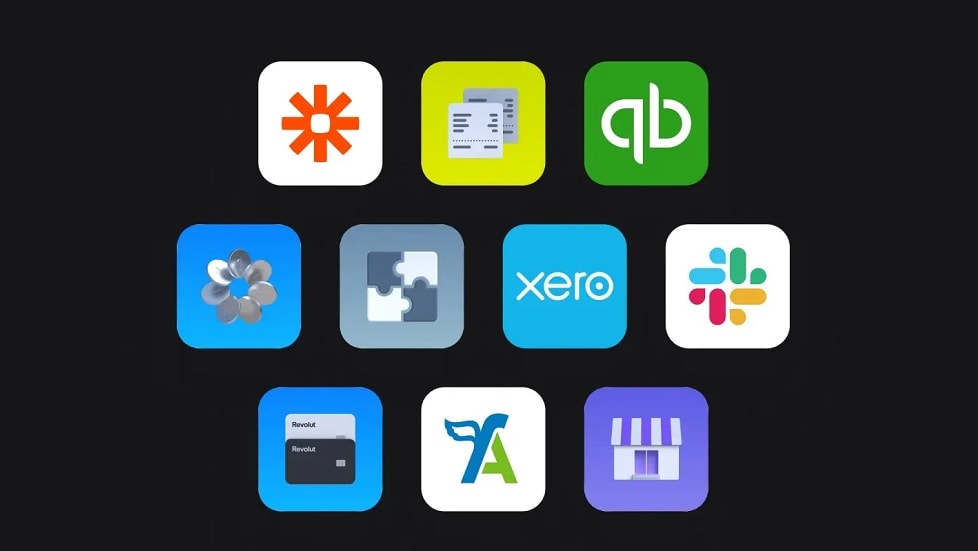
Revolut boasts pre-established integrations, from accounting software to expense tools, with industry leaders such as Xero, Zapier, and Quickbooks
Revolut stands out with its extensive array of integration possibilities, a feature that distinguishes it from Qonto. Revolut's versatility is evident through its seamless synchronization with a wide range of accounting tools and payment platforms.
Revolut boasts pre-established integrations, from accounting software to expense tools, with industry leaders such as Xero, Zapier, and Quickbooks, enhancing its appeal to businesses seeking comprehensive automation capabilities. While Qonto offers a range of compatible integrations with established software, it's worth noting that Revolut's integration scope extends even further. If your business values the ability to effortlessly connect with a diverse selection of essential software, Revolut is the optimal choice in this regard.
08 Qonto vs Revolut: Which is the best for your business?
Qonto is the best tool for you if:
- You prioritize seamless team collaboration with multi-user accounts and granular permission settings
- Meticulous expense tracking and budget management are crucial for your business operations
- You value a user-friendly interface and straightforward navigation, even without extensive financial expertise
- Your focus is on specialized financial solutions tailored to businesses, startups, and freelancers
- Prompt and responsive customer support is essential for navigating any challenges that arise
 You prioritize seamless team collaboration with multi-user accounts and granular permission settings
Revolut is the best tool for you if:
- You require multi-currency excellence and want to conduct international transactions and currency exchanges at interbank rates
- Advanced reporting tools for valuable insights into spending patterns align with your business's financial decision-making needs
- Versatile financial tools such as expense management, budgeting, and investments are important for your financial control
- You prefer a user-friendly mobile app for on-the-go financial management and transactions
- Global accessibility and compatibility are vital for businesses with international operations, ensuring smoother cross-border transactions
Qonto
The all-in-one business account
2 months free on the Basic and Smart plans
Save up to $100
09 Alternatives to Qonto & Revolut

Stripe
Used by 6907 members
Waived Stripe fees on your next $20,000 in payment processing
Save up to $500

QuickBooks
Used by 888 members
30% off for 6 months
Save up to $423

Mercury
Used by 491 members
$250 credit when you deposit $10k within your first 90 days
Save up to $250

Revolut Business
Used by 460 members
€80 signup bonus
Save up to $80
10 Promotions on Accounting software
Qonto and Revolut are great tools, but Secret offers promo codes with discounts on over 2190+ different SaaS solutions. New deals are added regularly, helping you save money on your online subscriptions. Get access to codes for other Accounting software you might want to purchase

Discount for Xero
90% off for 6 months
Promo codes for Mercury
$250 credit when you deposit $10k within your first 90 days
QuickBooks deal
30% off for 6 months

Deal for PayPlug
3 months off on Pro or Premium plans (except Shopify plugin)
Stripe promotion
Waived Stripe fees on your next $20,000 in payment processing

Code for WorldFirst
$100 sign-up bonus when you open a multi-currency account

FreshBooks coupon code
90% off for 3 months

Code for Quickbooks Online
50% off for 3 months (US-based companies)

Navan discount
Spend $500, Get $500 in Credit for your next booking

doola promo
20% off your first purchase
Start saving on the best SaaS
Secret has already helped tens of thousands of startups save millions on the best SaaS like Microsoft Teams, Google Workspace & many more. Join Secret now to buy software the smart way.