


Customer Relationship Management (CRM) helps you nurture leads, manage contacts and accounts, and enhance your sales pipeline. CRM software lets you do all of this—and more—from a central platform designed to help you share customer information across your organization.
But various products are available in this space and finding the right CRM for your business can feel overwhelming. In this article, we compare two popular choices, Zoho CRM and Salesforce Sales Cloud. By the end of it, you’ll understand their main features, differences, and use cases to help you choose the best one for your business. Let’s dive in!
- 01 Zoho vs Salesforce: overview
- 02 What's the difference between Zoho and Salesforce?
- 03 Zoho pros and cons
- 04 Salesforce pros and cons
- 05 Zoho compared to Salesforce
- 06 Salesforce compared to Zoho
- 07 Features comparison
- 08 Zoho vs Salesforce: Which is the best for your business?
- 09 Alternatives to Zoho & Salesforce
- 10 Promotions on CRM software
Start saving on the best SaaS
Secret has already helped tens of thousands of startups save millions on the best SaaS like Microsoft Teams, Google Workspace & many more. Join Secret now to buy software the smart way.

01 Zoho vs Salesforce: overview
Zoho and Salesforce stand out as prominent players in the competitive landscape of CRM software and business management platforms. Each offers unique strengths tailored to cater to diverse business needs.
Zoho is renowned for its comprehensive suite of business applications, including CRM, email marketing, project management, and more. It provides businesses with a versatile platform that covers various aspects of operations. In contrast, Salesforce specializes in CRM and excels in its robust sales automation, marketing automation, analytics, and custom application development capabilities.
Now, let's dive into the Zoho vs. Salesforce comparison to help you make an informed decision when selecting the right software suite for your specific business requirements.

Pricing plans
Zoho CRM offers a free plan. Its paid plans start at $14/month/user. Salesforce subscriptions start at $25/month/user.

Zoho
Salesforce
Pipeline management
Both include a good set of features like contact management, automation, and analytics. Salesforce offers advanced pipeline management with its highest-priced plans.
Zoho
Salesforce
Integrations
Zoho offers 800+ integrations including Google Docs, Microsoft 365, and Shopify. Salesforce has 3000+ integrations including Slack and Mailchimp. Both integrate with Zapier.
Zoho
Salesforce
Customer support
All paid Zoho plans include email, chat, and phone support. Salesforce’s plans offer access to online resources and online ticket support.
Zoho
Salesforce
Positive reviews
Both are well-rated on sites like Capterra. Some negative reviews relate to the potentially steep initial learning curve (Zoho) and the cost (Salesforce).
Zoho
Salesforce
Ease of use
Zoho is known for its highly intuitive user interface. Salesforce offers a clean, modern interface. Both can involve an initial learning curve, especially for advanced features.
Zoho
Salesforce
Automation
Zoho offers trigger-based automation for tasks and workflows. Salesforce also includes solid sales automation. Scheduled automations are available with higher plans.
Zoho
Salesforce
Reporting and analytics
Even with its cheaper plans, Zoho has a good range of analytics features. Salesforce offers various report types and an AI sales forecasting tool.
Zoho
Salesforce
Lead management
Both offer lead generation, scoring, and analytics. However, some of these features are only available with higher-priced plans.
Zoho
Salesforce
AI-powered features
Zoho’s top two plans include an AI assistant called Zia. Salesforce offers a generative AI tool called Einstein for an additional cost (included with Unlimited plan).
Zoho
Salesforce
02 What's the difference between Zoho and Salesforce?

A Zoho Page with the Zia Assistant, Requesting Monthly Leads by Source
Zoho
All-in-one customer relationship management software
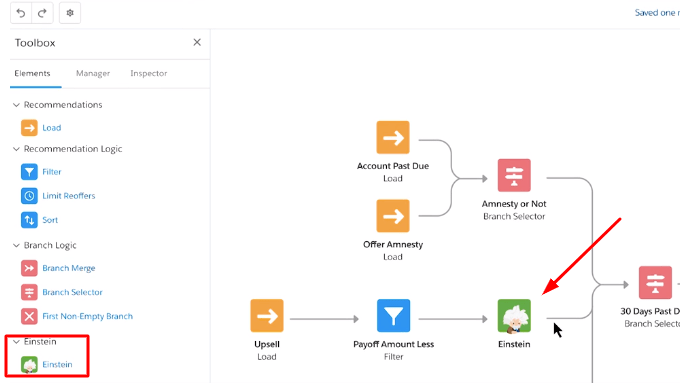
A Strategy in Salesforce with an Einstein Prediction Added to the Process
Salesforce
Salesforce is a widely-used cloud-based CRM platform that helps businesses organize customer data, manage sales and marketing workflows, and provide consistent support across different channels.
One of the key differences between the two solutions is their pricing. Salesforce is the more expensive. While Zoho CRM plans start at $14/month/user, Salesforce starts at $25/month/user. Zoho’s plans max out at $52/month/user for its Ultimate plan. Salesforce’s Unlimited plan is priced at $330/user/month. Zoho also offers a free version with solid CRM features, including contact management, email marketing, sales automation, and more. Ultimately, Salesforce is a premium product. You pay a higher price for it, but you get increased functionality in return.
Zoho and Salesforce’s AI features also diverge. Zoho’s AI work assistant, Zia, is designed to make your CRM more efficient. It can make workflow automation suggestions, run analytics for personalized customer recommendations, and perform data enrichment to find missing lead data. It also suggests basic writing improvements. Zia is only available with Zoho’s top-tier plans. Salesforce’s AI assistant, Einstein, is generative AI. Compared to Zoho, its distinguishing feature is that it can create content for you, drawing on public and private data models. This functionality is currently available with the Sales Cloud as Sales GPT and can generate sales-related content, for example, sales emails.
A final difference between Zoho and Salesforce is their scalability. Salesforce has several features that make it a very scalable option. Designed with large businesses in mind, it offers a vast range of integrations and a suite of other cloud products. These include service, marketing, and e-commerce clouds. Salesforce also has products for customer interactions, advanced analytics, and sustainability data management. You can pick and mix these to create a customized platform to suit your growing business needs. Zoho similarly offers a range of other complementary products but not to the scope and scale of Salesforce.

Zoho
Used by 1420 members
$3,000 in credits for 1 year
Save up to $3,000

Salesforce
Used by 265 members
45% off the Starter Suite plan for 1 year
Save up to $675
03 Zoho pros and cons
What are the advantages of Zoho?
- Comprehensive suite: Zoho provides an extensive suite of integrated applications, including CRM, email, marketing, project management, and more, allowing businesses to manage various aspects of their operations from a single platform.

- Affordability: Zoho offers competitive pricing with affordable plans for small businesses, startups, and enterprises. They also have a free plan with limited features, making it accessible for businesses with budget constraints.
- Customization: Zoho allows users to customize and tailor their applications to fit their specific needs. This flexibility is particularly useful for businesses with unique workflows and processes.
- Integration: Zoho integrates well with third-party apps and services, enhancing its versatility and compatibility with existing software tools.
- Mobile accessibility: Zoho offers mobile apps for various platforms, enabling users to access and manage their business data on the go.
What are the disadvantages of Zoho?
- Learning curve: Some users may find Zoho's interface and features complex, requiring a learning curve to maximize its potential.

- Limited features in free plan: While Zoho offers a free plan, it comes with limitations in terms of functionality and features compared to paid plans.
- Integration complexity: While Zoho integrates with third-party apps, setting up and configuring these integrations can sometimes be complex and time-consuming.
- Customer support: Some users have reported inconsistent customer support experiences, with occasional delays in response and resolution times.
- Scaling challenges: While Zoho is suitable for small and medium-sized businesses, larger enterprises may find it challenging to scale with Zoho's offerings, especially as their needs become more complex.
Compare Zoho to other tools


Zoho vs Monday

Zoho vs Google Workspace

Zoho vs Xero

Odoo ERP vs Zoho

Zoho vs Zendesk

Zoho vs HubSpot
04 Salesforce pros and cons
What are the advantages of Salesforce?
- Comprehensive CRM: Salesforce provides a comprehensive customer relationship management (CRM) platform with a wide range of features for sales, marketing, customer service, and analytics. It's a one-stop solution for managing customer interactions.
- Customization: Salesforce is highly customizable, allowing businesses to adapt the platform to their specific needs. Users can create custom objects, fields, and workflows to align with their unique processes.
- Scalability: Salesforce is scalable and can accommodate the needs of small businesses and large enterprises alike. It can grow with your organization as it expands.
- AppExchange: Salesforce's AppExchange offers a vast marketplace of third-party apps and integrations that extend its functionality. This makes it versatile and adaptable to various business requirements.
- Analytics and reporting: Salesforce offers robust analytics and reporting tools, providing valuable insights into sales performance, customer behavior, and other key metrics.
What are the disadvantages of Salesforce?
- Cost: Salesforce can be relatively expensive, especially for smaller businesses. The pricing structure and additional costs for advanced features and user licenses can add up.
- Complexity: Salesforce's extensive features and customization options can be overwhelming for new users. It may require substantial training and expertise to harness its full potential.
- Integration challenges: While Salesforce supports integrations, setting up and maintaining integrations with third-party software can be complex and may require additional technical resources.
- Steep learning curve: The platform's complexity can result in a steep learning curve for users and administrators, potentially slowing down the adoption process.
- Customer support: Some users have reported challenges with Salesforce's customer support, including delays in response and difficulty in resolving issues.
Compare Salesforce to other tools


Freshsales Suite vs Salesforce
HubSpot vs Salesforce
Zendesk vs Salesforce

Freshworks vs Salesforce

Pipedrive vs Salesforce
05 Zoho compared to Salesforce
When comparing Zoho and Salesforce, Zoho distinguishes itself with its versatility and user-friendly interface, making it an attractive option for businesses with varying needs in the realm of CRM and business management software. Zoho's pricing structure, including budget-friendly plans and a free tier, is tailored to suit the requirements of startups and small to medium-sized enterprises, allowing them to enhance their operations without a substantial financial commitment.
While both Zoho and Salesforce excel in facilitating effective customer relationship management, the choice between the two hinges on specific business needs. Zoho provides a cost-effective and versatile solution with a strong emphasis on customization, making it an ideal choice for organizations aiming to streamline their CRM processes without breaking the bank.
Is Zoho better than Salesforce?
 Is Zoho better than Salesforce?
The comparison between Zoho and Salesforce hinges on specific business requirements. Zoho, known for its affordability and comprehensive features, offers seamless integration within the Zoho suite, making it cost-effective for businesses seeking an all-in-one solution. For example, a small e-commerce business may find Zoho's affordability and built-in marketing tools suitable for managing customer relationships.
In contrast, Salesforce boasts an expansive app ecosystem and advanced capabilities, making it a favored choice for large enterprises with intricate CRM needs. A multinational corporation may leverage Salesforce's scalability and customization options to handle complex sales processes.
What is Zoho best used for?
Zoho excels in catering to the needs of small to mid-sized businesses seeking a cost-effective yet feature-rich CRM solution. It proves ideal for enterprises that prioritize efficient customer relationship management without incurring exorbitant expenses. A startup can leverage Zoho's sales automation and lead management features to kickstart their sales efforts and efficiently nurture leads.
Moreover, Zoho's comprehensive offering, including analytics and integrated project management, ensures businesses can centralize their operations within a unified platform. This consolidation enhances collaboration and data-driven decision-making.
Can Zoho replace Salesforce?
Zoho presents a viable alternative to Salesforce for businesses seeking a cost-effective CRM solution. While it may not match Salesforce's extensive ecosystem, Zoho's comprehensive feature set caters to core CRM needs. For instance, a small consultancy firm may find Zoho's lead management, sales automation, and analytics capabilities sufficient to enhance customer relationships.
The decision to opt for Zoho over Salesforce depends on factors such as budget constraints and specific business requirements. Zoho offers affordability without compromising essential CRM functionalities, making it an attractive choice for organizations prioritizing cost-effective customer relationship management.
Is Zoho cheaper than Salesforce?
When it comes to pricing, Zoho undeniably offers a cost-effective advantage. Zoho's pricing structure is budget-friendly compared to Salesforce, making it an appealing option for businesses conscious of their expenses. A small e-commerce startup can benefit from Zoho's affordability while still accessing essential CRM features.
While both Zoho and Salesforce provide multiple plans tailored to different business sizes and requirements, Zoho's emphasis on cost-effectiveness stands out. This makes it particularly attractive for startups, SMEs, and businesses looking to optimize their CRM processes without a substantial financial commitment. In summary, Zoho's affordability can be a significant factor in the decision-making process, especially for organizations operating within budget constraints.
Is there a better CRM software than Zoho?
Zoho provides a versatile set of business applications, but it's crucial to explore whether there might be a more suitable software for your specific business needs.
Some notable alternatives to Zoho in the business software space include Salesforce, HubSpot, Microsoft Dynamics 365, and Pipedrive.
The choice of business software depends on your organization's unique requirements, industry-specific challenges, and budget considerations. While Zoho offers a comprehensive suite of applications for CRM, marketing, project management, and more, other tools may excel in specific areas and provide a more tailored solution for your business.

Zoho
Premium
All-in-one customer relationship management software
$3,000 in credits for 1 year
Save up to $3,000
06 Salesforce compared to Zoho
Salesforce distinguishes itself with its comprehensive feature set and extensive capabilities in the realm of CRM and business management software. Salesforce's robust suite of tools caters to businesses of all sizes, from startups to large enterprises, offering advanced features for sales, marketing, customer service, and analytics.
While both Salesforce and Zoho excel in the field of CRM, the choice between the two depends on the specific requirements of your business. Salesforce offers a highly customizable and scalable solution, making it an ideal choice for businesses seeking extensive customization, integration possibilities, and advanced capabilities to optimize their customer relationship management. In contrast, Zoho provides a cost-effective alternative with a user-friendly interface, suitable for startups and smaller businesses looking to enhance their CRM operations without a substantial financial commitment.
Is Salesforce better than Zoho?
The comparison between Salesforce and Zoho depends on specific business needs. Salesforce excels in scalability, advanced functionalities, and its vast app ecosystem. For instance, a global corporation can leverage Salesforce's robustness to manage intricate sales processes and integrate with numerous third-party applications, ensuring seamless operations.
Although Salesforce's pricing tends to be higher than Zoho's, its comprehensive feature set often justifies the investment for enterprises. Conversely, Zoho's affordability is appealing for small to mid-sized businesses seeking a cost-effective CRM solution. Ultimately, the choice hinges on factors such as budget, scalability requirements, and the need for advanced features, with Salesforce catering to larger enterprises and Zoho to businesses prioritizing affordability.
What is Salesforce best used for?
Salesforce is exceptionally well-suited for large-scale enterprises seeking a comprehensive CRM solution with advanced capabilities. Its versatility shines through features such as service automation, marketing cloud, AI-driven insights, and the expansive AppExchange platform. For instance, a multinational corporation can harness Salesforce's extensive customization and integration options to streamline customer interactions and automate complex business processes, ultimately enhancing efficiency and productivity.
Salesforce's robust suite empowers organizations to manage sales, marketing, and customer service operations seamlessly. The platform's scalability ensures it can adapt to the evolving needs of large enterprises, making it a preferred choice for those prioritizing a full-fledged customer relationship management solution tailored to their extensive requirements.
Can Salesforce replace Zoho?
Salesforce can indeed serve as a replacement for Zoho, especially for larger organizations seeking scalability and advanced functionalities. For example, a multinational corporation can harness Salesforce's extensive customization, integration options, and robust ecosystem to manage complex customer relationships efficiently.
However, for smaller companies with budget constraints, Salesforce's higher cost may not align with their financial capabilities. In such cases, Zoho's affordability and still-comprehensive feature set might be the better choice.
Is Salesforce cheaper than Zoho?
Salesforce typically carries a higher price tag compared to Zoho. Salesforce’s pricing offers a variety of plans, each tailored to deliver a specific range of capabilities.
While these extensive features are justifiable for many businesses seeking advanced CRM functionalities, smaller companies or startups with limited financial resources may find Salesforce's cost prohibitive. For example, a burgeoning tech startup may opt for Zoho's more budget-friendly plans while still accessing essential CRM tools. The choice ultimately depends on an organization's budget and specific CRM needs, with Zoho providing an affordable alternative for those seeking cost-effective solutions.
Is there a better CRM software than Salesforce?
Salesforce is a powerful CRM platform, but it's important to explore whether there might be a more suitable software solution for your specific business needs.
Some notable alternatives to Salesforce in the CRM and business management software space include Zoho CRM, HubSpot CRM, Zendesk, and Monday Sales CRM.
The choice of CRM software depends on your organization's unique requirements, industry-specific challenges, and budget constraints. While Salesforce offers a comprehensive suite of CRM, sales, and marketing tools with extensive customization options, other platforms may offer more tailored solutions for specific industries or business sizes.

Salesforce
Premium
The world’s #1 AI CRM
45% off the Starter Suite plan for 1 year
Save up to $675
07 Features comparison
Salesforce Offers Superior Mobile App Features Compared to Zoho

Salesforce gains a notable advantage with its dedicated mobile app feature, which empowers users to efficiently manage contacts, deals, and tasks while on the move
Salesforce gains a notable advantage with its dedicated mobile app feature, which empowers users to efficiently manage contacts, deals, and tasks while on the move. For instance, a sales representative can swiftly access critical customer data, monitor deal progress, and respond to leads directly from their smartphone or tablet, ensuring enhanced productivity and responsiveness, especially for remote business operations.
In contrast, while Zoho offers a broad spectrum of features, its less robust mobile app capability places Salesforce ahead, particularly for businesses with remote operations. Salesforce's mobile functionality caters to the demands of a mobile workforce, allowing users to stay connected and productive wherever they are, making it a preferred choice in today's agile business landscape.
Salesforce Dominates Over Zoho in App Directory

Salesforce's adaptability extends to email marketing tools, productivity apps, and chat services, offering a comprehensive ecosystem.
When exploring integration capabilities, Salesforce undoubtedly takes the lead. Its robust API facilitates seamless integration with an extensive spectrum of third-party applications. Salesforce's adaptability extends to email marketing tools, productivity apps, and chat services, offering a comprehensive ecosystem. A marketing agency, for example, can effortlessly integrate Salesforce with email marketing platforms, social media management tools, and analytics software, creating a unified hub for streamlined operations.
In contrast, while Zoho offers decent integration capabilities, particularly within its suite of products, it doesn't quite match Salesforce's wide-ranging compatibility with third-party applications. This makes Salesforce a superior choice for businesses heavily reliant on integrations to optimize their processes.
Zoho Surpasses Salesforce in User-Friendliness

Users can swiftly adapt to Zoho, allowing them to focus on harnessing its features to enhance business operations.
When evaluating ease of use, Zoho stands out as a clear front-runner. Its intuitive interface and user-friendly design make it accessible even for beginners with limited technical expertise. Users can swiftly adapt to Zoho, allowing them to focus on harnessing its features to enhance business operations. A small e-commerce startup can quickly set up and manage customer relationships using Zoho without extensive training.
On the other hand, Salesforce, while undeniably powerful, often carries the reputation of complexity with a steep learning curve, especially for novices. The extensive array of features can be overwhelming and may necessitate additional training for full utilization. In this regard, Zoho emerges as the winner in terms of ease of use, providing a more accessible CRM solution for businesses seeking a user-friendly interface.
Zoho Centralizes Your Needs Better Than Salesforce
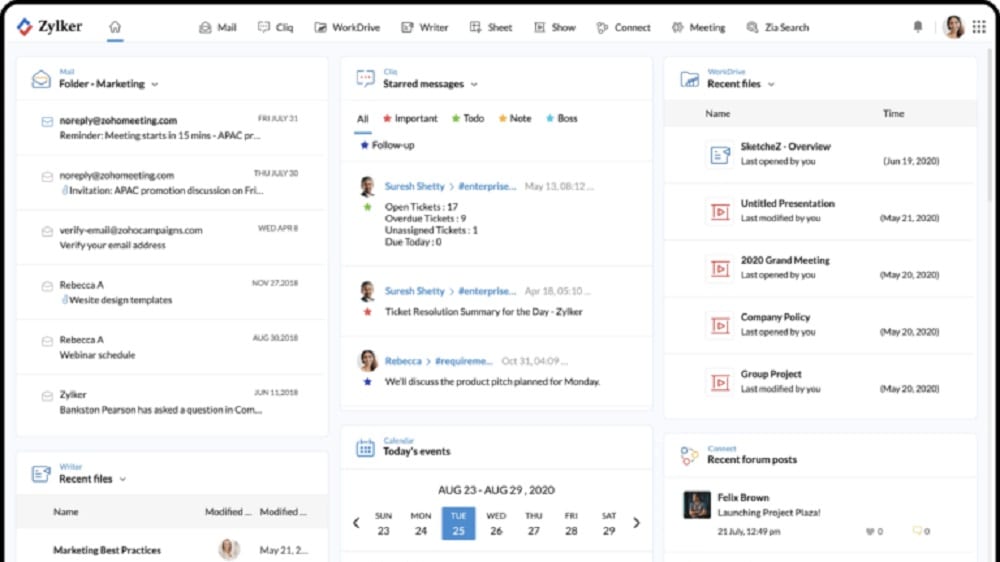
Zoho seamlessly integrates CRM, customer support software, a development platform, and instant messaging within a unified platform.
Both Zoho and Salesforce provide extensive suites of features, but Zoho excels in centralizing various business needs. Zoho seamlessly integrates CRM, customer support software, a development platform, and instant messaging within a unified platform. For instance, a tech startup can efficiently manage customer relationships, offer support, and collaborate on projects without the need for multiple disparate tools.
This centralization simplifies operations, particularly for startups and small businesses looking to streamline their processes. Rather than investing in and learning multiple applications, Zoho offers a more convenient and cost-effective solution for managing various aspects of their operations under one roof, contributing to enhanced efficiency and productivity.
Zoho Better Optimizes Your Company Finances than Salesforce

Zoho extends its capabilities beyond basic CRM functionalities by offering comprehensive financial management tools.
Zoho extends its capabilities beyond basic CRM functionalities by offering comprehensive financial management tools. This empowers businesses to perform a wide range of financial tasks within the same platform. A small e-commerce business can use Zoho to create invoices, track stock levels, manage customer subscriptions, conduct inventory management, and even collect payments online seamlessly.
In contrast, while Salesforce excels at tracking transactions and managing sales processes, it doesn't provide as comprehensive a financial management solution as Zoho. This makes Zoho a more well-rounded choice for businesses that require both robust customer relationship management and extensive financial tools, consolidating these critical functions into a single platform for enhanced efficiency and convenience.
Salesforce's Contact Management Outshines Zoho's

Salesforce stands out with its efficient contact and account management capabilities, allowing users to effortlessly centralize vital information with just a few clicks.
Salesforce stands out with its efficient contact and account management capabilities, allowing users to effortlessly centralize vital information with just a few clicks. Moreover, Salesforce boasts an auto-synchronization feature that ensures contact details are consistently updated by pulling data from email inboxes. This functionality proves invaluable for businesses aiming to maintain accurate and comprehensive customer profiles.
In contrast, while Zoho offers communication tools to facilitate teamwork and collaboration, it lacks a dedicated contact management feature comparable to Salesforce's. This makes Salesforce the preferred choice for businesses that prioritize centralized and well-organized contact and account information, ensuring a comprehensive and up-to-date customer database.
Both Zoho and Salesforce Provide Excellent Customer Service Tools
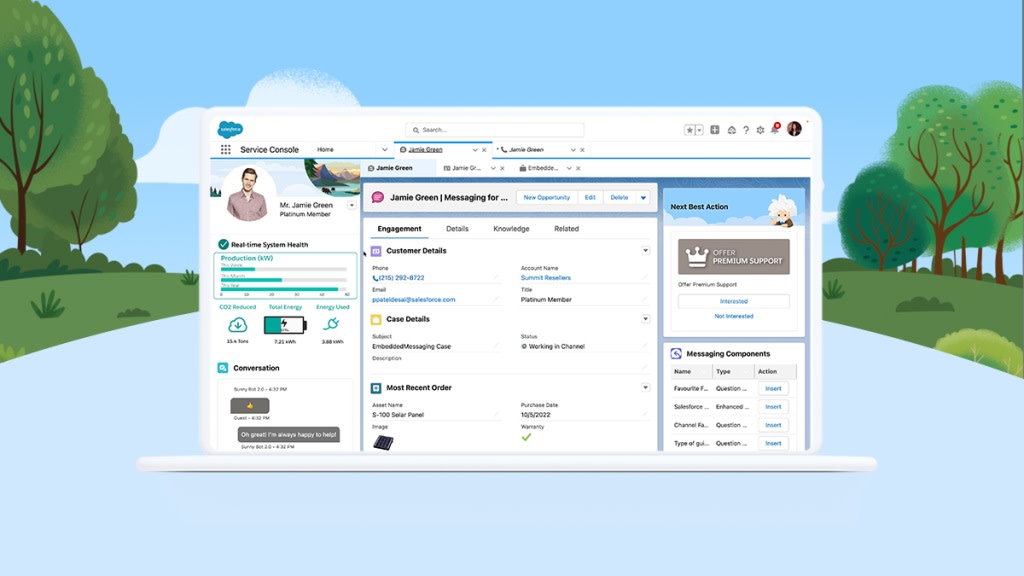
Salesforce excels in managing customer feedback and inquiries through various communication channels like chat, phone, and email
Zoho and Salesforce are evenly matched in their capabilities for delivering exceptional customer service. Zoho's robust tools empower businesses to respond to user inquiries promptly and effectively, contributing to the establishment of strong customer loyalty. Tech companies, for example, can use Zoho to efficiently address customer requests and provide valuable assistance.
Similarly, Salesforce excels in managing customer feedback and inquiries through various communication channels like chat, phone, and email. This multifaceted approach ensures that customers can reach out and receive support using their preferred method. Both platforms are well-equipped to facilitate high-quality customer support, allowing businesses to prioritize customer satisfaction and nurture lasting relationships.
08 Zoho vs Salesforce: Which is the best for your business?
Zoho is the best tool for you if:
- You’re a start-up or small to medium-sized business looking for an affordable CRM solution or a free plan that includes basic but functional CRM features
- You have limited technical expertise or previous CRM experience and want a user-friendly platform with an intuitive interface to set up and start using quickly
- You’re looking for a CRM supported by a broader software ecosystem that offers tools for business functions like marketing or project management
- You’re a start-up looking to boost sales via sales automation, lead management, and lead nurturing features
- You want to centralize your business needs including CRM, customer support and service, instant messaging, and collaboration features on a single platform
 You’re a start-up or small to medium-sized business looking for an affordable CRM solution or a free plan that includes basic but functional CRM features
Salesforce is the best tool for you if:
- You intend to scale your business significantly and require a suite of business management tools to support this
- You’re a large enterprise or multinational corporation with complex business systems and sales processes that demand advanced CRM capabilities
- Your business’s systems require a high degree of customization when it comes to optimizing CRM
- You have a larger budget for a CRM and want access to a broader range of business management features
- You manage a remote workforce that needs a full-featured CRM app to access customer data and deal information while on the go
Zoho
Used by 1420 members
$3,000 in credits for 1 year
Save up to $3,000
Salesforce
Used by 265 members
45% off the Starter Suite plan for 1 year
Save up to $675
09 Alternatives to Zoho & Salesforce

Google Workspace
Used by 9162 members
20% off Plus plans for 1 year
Save up to $518

Slack
Used by 3779 members
25% off new plan purchases
Save up to $9,000

Pipedrive
Used by 2897 members
30% off for 12 months
Save up to $3,564

HubSpot
Used by 2787 members
90% off the Professional and Enterprise plans for 1 year
Save up to $7,000
10 Promotions on CRM software
Zoho and Salesforce are great tools, but Secret offers promo codes with discounts on over 2200+ different SaaS solutions. New deals are added regularly, helping you save money on your online subscriptions. Get access to codes for other CRM software you might want to purchase
HubSpot discount code
90% off the Professional and Enterprise plans for 1 year
Credits for Pipedrive
30% off for 12 months

folk CRM deal
14 days free + 20% off annual plans

Discount for Notion
6 months free on the Business plan with Unlimited AI

Promo codes for Zendesk
6 months free (with AI Agents and Copilot)

HighLevel discount
First month free

Freshworks coupon code
14 days free on Freshdesk

Attio discounts
14 days free + additional 10% off monthly or annual plans

Clay promo code 2026
14 days free + 10% off annual plans

ActiveCampaign promo code
90% off any annual plan for the first year
Start saving on the best SaaS
Secret has already helped tens of thousands of startups save millions on the best SaaS like Microsoft Teams, Google Workspace & many more. Join Secret now to buy software the smart way.